
This post may contain affiliate links. We only recommend products and services we find to be high quality and beneficial. Thank you for supporting us. Our family thanks you!
We all have that whole foodie friend in our lives – the one who puts kale in everything and grinds their own flour before baking. Their lifestyle is admirable and something to be commended but seems a little far out for the average household.
Think again!
There are many reasons why milling your own flour is the best way to go. If you don’t already do it, it’s something you should look into – it’s not only for your foodie neighbor.
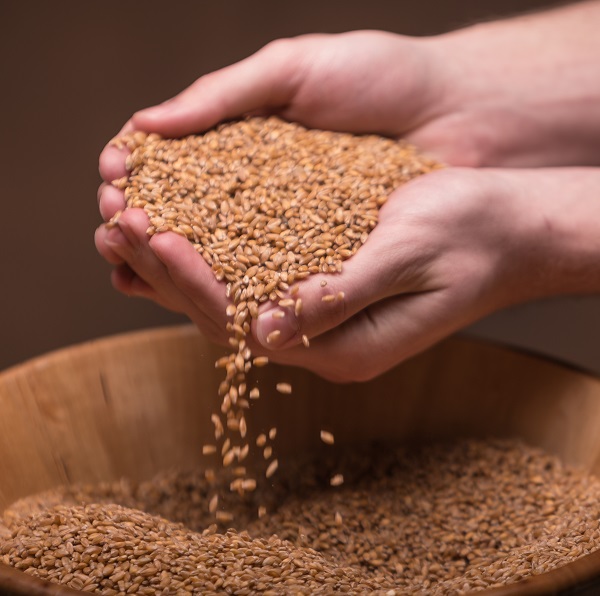
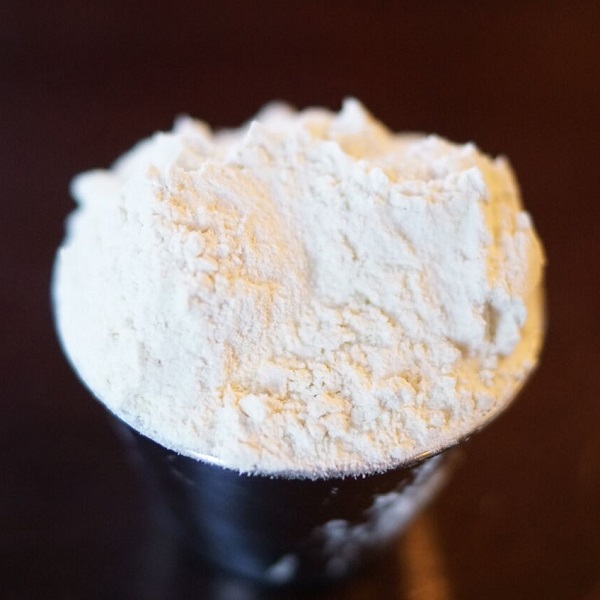
What is Just-in-Time milling? Say goodbye to buying stale bags of flour that have been sitting on a shelf for who knows how long. Now you buy whole grain einkorn berries here and when you are ready to bake, you throw the berries in your mill and the fresh flour comes out and is ready to be used for all your baking needs right when you need it!
Don’t have a flour mill? Keep reading to the end of this article to see an incredible deal we’ve put together for you!
So why would anyone take an extra step to grind their own flour when there are so many companies who would gladly do it for you? We’ve milled our at home flour for years, and it’s simply a way of life for us, and we love it.
Turns out, there are way more pros to grinding your own flour than cons.
It really comes down to four main things: taste, quality, health, and cost.
Freshly Milled Einkorn Flour Tastes Better
Gratefully, I grew up with a mother who ground her own wheat. We didn’t use anything as healthy as einkorn, but even so, I was spoiled. I remember eating wonder bread sandwiches at friend’s houses and going “What is this stuff holding the sandwich together? It tastes like soggy cardboard.” Luckily my mother had also managed to teach me some tact, and I never said anything like that out loud.
But it was clear to me. Whole wheat bread has so much more deep and complex flavor than white bread and einkorn bread has even more flavor than that.
Some of you may be thinking, “Ok fine, but why do I have to grind it myself? You can buy whole wheat flour if it means that much to you.” True. However, have you ever had this experience?
You make something delicious for dinner. Your senses are reeling and you are so excited when you realize there are leftovers! The next day at lunch you are so ready to have more of your masterpiece, but, for some reason, it just isn’t quite the same. It’s still good, but the freshly made flavor is gone.
Flour is the same. A lot of flavor is lost as flour sits. This is because it is susceptible to oxidation and rancidity. There is just something about freshly ground flour that tastes better.
It’s a noticeable difference. Dr. Stephen Jones, who is the director of The Bread Lab at Washington State said, “There are real flavors that are lost within a short time. We’ve done informal blind tastings, and the difference between flour that was freshly milled and flour that had been stored for a while was clear to everyone.” (Fresh Flour Power)
Try as they might, no flour company can match the outstanding flavor that comes into your baked goods when you grind your own flour. Even if you choose to sift your flour for better texture, you are going to retain so much more flavor than if you bought flour.
Just-In-Time Milling Improves Quality
Some people would like to bake with whole wheat flour but feel like, when they do, something in texture is lost. This is because, when grinding your own flour, you remove nothing. The bran, which is removed from all-purpose flours, is coarse and sharp and tends to cut through the gluten strands so that the bread becomes denser and less fluffy.
This has never been a big problem for us, but if you want to minimize that effect, you can sift your flour so that some of that is removed without removing everything that gives the bread flavor and nutrition.
When you grind your own wheat or einkorn, you can also decide how fine you want your flour. It can be anywhere from cracked wheat to a very fine powder. So you don’t have to sacrifice beautiful light breads, but if you’re looking for coarser flour or cracked wheat for hot cereal, you have that option without buying another bag of flour.
Freshly ground flour, because it hasn’t been sitting and compacting, is the absolute best in terms of bread-making quality. If you have any experience with baking from scratch, you will be able to tell that the quality of bread made from your flour is leaps and bounds ahead of commercial flour.
Freshly Milled Flour is More Nutritious
This is the no-brainer when it comes to grinding your own flour. Einkorn grain especially is packed with nutrients. Grinding your own flour is the way to get all of those nutrients into your body.
The minute berries are ground into flour, the loss of nutrients begins, and the longer it sits, the greater the loss. For maximum nutrient density, it’s best to grind flour as you use it. It only takes a few minutes to grind what to need and the benefits are unbelievable.
Commercial millers generally add ingredients you don’t want such as potassium bromate and Azodicarbonamide (used to make yoga mats).
Commercial millers do add nutrients in after they mill but nutrients that are processed in a lab and then added to your flour can never take the place of the naturally occurring nutrients that are in the flour you grind at home for immediate use.
Not to mention, you get to control what is removed. A little sifting for texture does not remove nearly as many nutrients as are removed from processed all-purpose flour. Trust me, it makes a huge difference.
Milling Yourself is Cheaper
Eating healthy very often costs more than we’d like, but in this case, it actually doesn’t have to. Generally speaking, whole berries cost less than flour because there is much less processing required. For our einkorn, that is definitely true. If you can grind your own flour, that means you can store berries instead of flour. Since berries store so much longer than flour, you can buy berries cheaper in bulk and store them until you’re ready to grind!
Choosing Your Grain Mill For Home Use
And now some of your are saying “But I don’t have a flour mill, and those aren’t cheap.” Often that’s true but to make your adventure into milling your flour all the more enjoyable, we’ve arranged a special opportunity that you may want to consider.
Wolfgang Mock is a grain mill engineer out of Germany. For over 40 years, he’s been designing and manufacturing flour mills for home use.
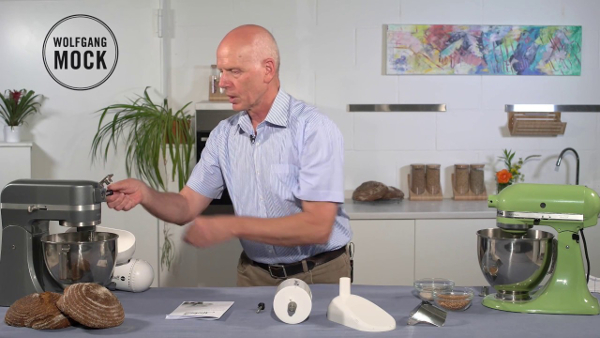
Wolfgang wants every household to have a mill so they can enjoy the benefits of fresh foods. He teaches classes and shows people how easy it is to mill flour and bake. It’s easier than most people every imagined, thanks to his grain mills.
His new Mockmill® line of mills culminates Wolfgang’s 40 years of engineering home mills with the finest yet most affordable mills on the market today.
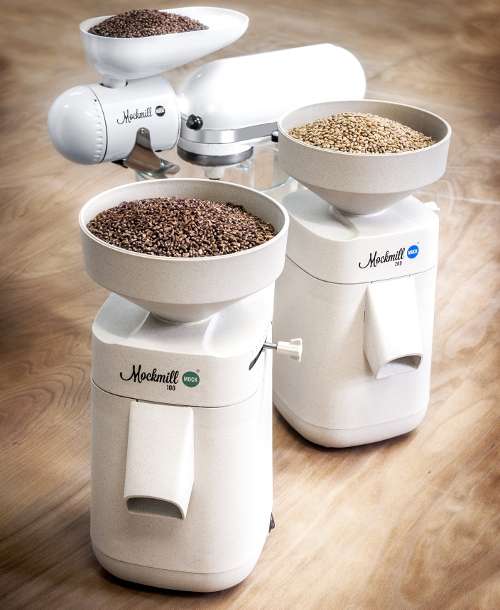
Wolfgang has 3 flour mills, Mockmill grain mill attachment for stand mixers, and two counter top mills. Mockmill 100, and the Mockmill 200.
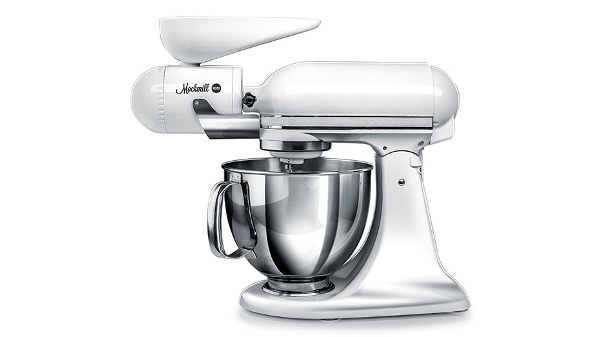
Mockmill Grain Mill Attachment for Stand Mixers – The grain mill attachment for stand mixers (KitchenAid, Kenmore). Easy to clean. Simple to use for milling just the amount of fresh flour you need for your recipe. The finest stone mill attachment for stand mixers on the market today.
We tested the Mockmill Grain Mill Attachment for Stand Mixers in our kitchen. It produced a nice, fine flour and it didn’t heat up. I really like the versatility and compact features of the Mockmill Grain Mill Attachment For Stand Mixers. It’s small enough to put on the shelf, out of the way. This stone mill is great for anyone who wants to mill their flour at home, and has a stand mixer.
If you are looking for higher capacity milling, and don’t want to tie up your stand mixer while you mill flour, you should consider the Mockmill 100 and Mockmill 200.
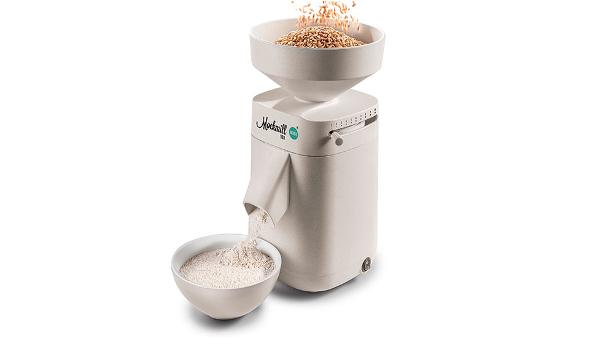
Mockmill 100 Grain Mill – An incredibly affordable grain Found here on our website , Wolfgang’s Mockmill 100 has the largest mill stones in the market, with a new patented housing made from “liquid wood”. It appears to be plastic but it’s actually 98% natural fibers. It makes the mill eco-friendly AND budget friendly!
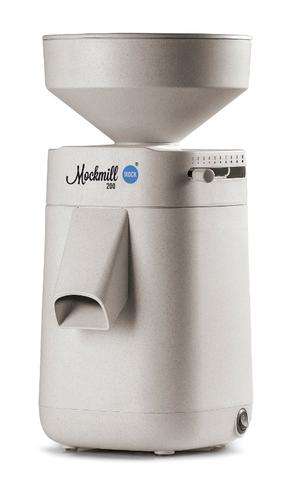
Mockmill 200 Stone Grain Mill – Sold here. The Mockmill 200 is just like the Mockmill 100 only double the milling speed!
All three Mockmill models are available for purchase on our website. Click here to learn more about the Mockmills.
And you can use your Mockmill for milling more than just einkorn. The Mockmill can also be used to mill quinoa, corn, rye, oats, rice, barley, legumes, spices and many more.
Plus, if you’d like to sift your freshly milled flour to remove some of the bran, and make more of an all-purpose flour, here is a flour sifter you may want to consider…
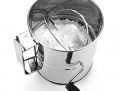 Flour Sifter – 8 cup capacity. Sturdy stainless steel.
Milling your flour at home is exciting when you consider all the possible creations and benefits. It’s a great idea if you plan to make einkorn a regular part of your life. Hopefully this information has been helpful as you embark on the journey.
Be sure to check out Wolfgang’s new line of mills on his website, and pocket the savings on the Mockmill 100 before the special pre-release price discount goes away.
If you have any questions or additional insights about milling flour, we’d love to hear about it in the comments.

61 thoughts on “The Best Way to Mill Einkorn Grain Into Flour”
Here is some information that I have found that I would like to pass along..
I grind einkorn berries in a Mockmill 200 and then sift the flour through a
200 micron filter (avail. @ https://www.mannlakeltd.com/200-micron-filter-fine?list=Category%20Listing )
I have some digestion issues when eating to much coarse fiber and have found that the
einkorn/sifting is easy for me to digest, which is wonderful because I have not been able to eat ‘regular’ flour either white (gluten) or whole wheat flour for years and now have no issues..
I find that setting the Mockmill at its finest setting works well with just 1 milling but have found that
if I run the part of sifted flour that does not go through the sifter ( the brown fiber part) through
the mill a second time I get more fine [white] flour when I sift it again..
I also have tried the Mixmaster mill attachment (not the Mock Mill attachment) and it worked good to make flour, but it
heated up both the flour and the machine also it took forever to grind the berries (like 10 minutes or so to do a cup of flour), so if you value your time and don’t want to burn up your Mixmaster I recommend
that you use a dedicated mill…I also tried a Vitamix mill attachment and it didn’t grind the flour as fine as I prefer it even on the finest setting…
I am wondering what the best way to store the wheat berries is? Or where I can find more information on storage.
Hi Amber, if you are buying very large amounts, we have super pails for long term storage. If not, just make sure they are stored cool and dry and they should be fine. You can always freeze or refrigerate if those conditions are hard to come by.
Hi there! When will All purpose be back in stock? Thanks!
Hi Kerri, we don’t have an exact date. We are trying to move the processing in house and will make it available when the equipment is in place for that. I’d be happy to notify you when that’s all in place.