
Let’s continue our discussion about methods for making healthy bread by talking about how to make your own sourdough start. A handy thing to know if you want to make your own healthy einkorn bread.
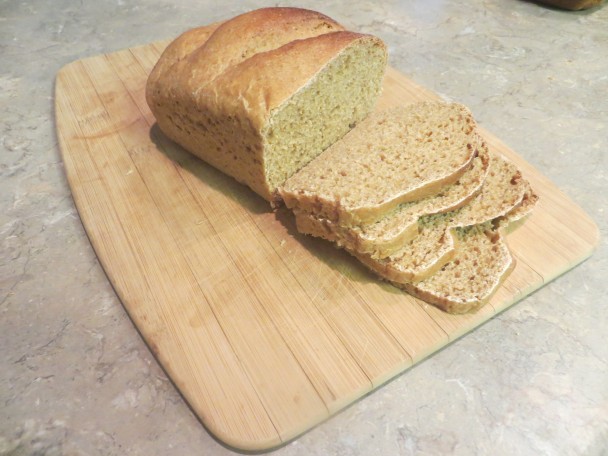
As you may know, sourdough bread rises without the use of packaged yeast. The bread dough undergoes a fermentation that causes it to rise.
But about how does one get a sourdough start to begin with?
You can either get one from someone you know or make one yourself. Even if you are making einkorn sourdough bread, you can get a small sourdough start from a friend – it does not have to be einkorn – and use that to begin your einkorn sourdough start by simply feeding it einkorn flour.
But today, I want to share how to create your own sourdough or natural leavening start.
The make-it-yourself process was something new for me. We got ours from a friend. However, so many people were asking about it that I decided to try it. I adapted Dr. Price’s sourdough method for Einkorn.
This took a couple of tries. The first couple of attempts just didn’t work at all. I was tempted to tell everyone to figure it out themselves. I watched some less-than-helpful youtube tutorials with complex recipes and procedures that just didn’t work for me. Then I found Dr. Price’s recommendation. I didn’t follow it exactly but it helped give me an idea.
Even using his method, the first couple attempts were failures. My guess is that the temperature was not right. It should be about 60°-65°. I got it to work placing it in the oven with the light off. Another mistake I made was covering it too tightly. I just used the lid that goes with the bowl, but that stifled the growth. In this case, I used Dr. Price’s recommendation – covering it with parchment and a damp towel.
The start that finally ended up working is pictured below. It smelled really horrible for the first few days, and I contemplated throwing it away because it did not smell like sourdough to me. However, after a few days it began to smell like sourdough and worked successfully in a recipe. So, don’t despair. It does take a few days to complete.
Day 1: Measure 120 grams of Einkorn flour and 120 grams of lukewarm tap water into a glass bowl. The mixture should be thick and pasty. Loosely cover (I took Dr. Price’s advice and covered it with parchment and a damp towel) and place in oven with the light off (The temperature is important. I found that, for where I live, that was the best place to keep the temperature right. You may need to experiment).
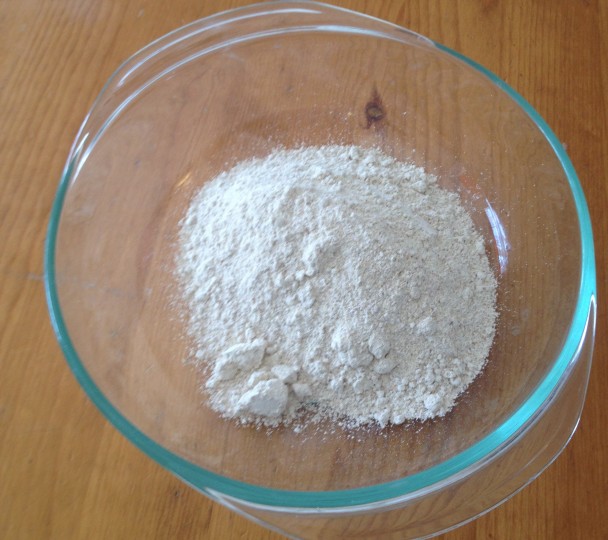
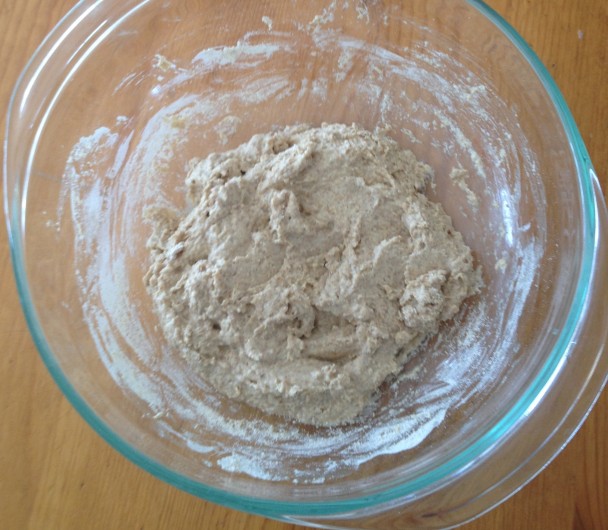
Day 3: Discard half of the start and feed it again with 120 grams of flour and 120 grams of water. (The discard process is to keep you from ending up with more start than you know what to do with.)
Day 4: Repeat process from day 3.
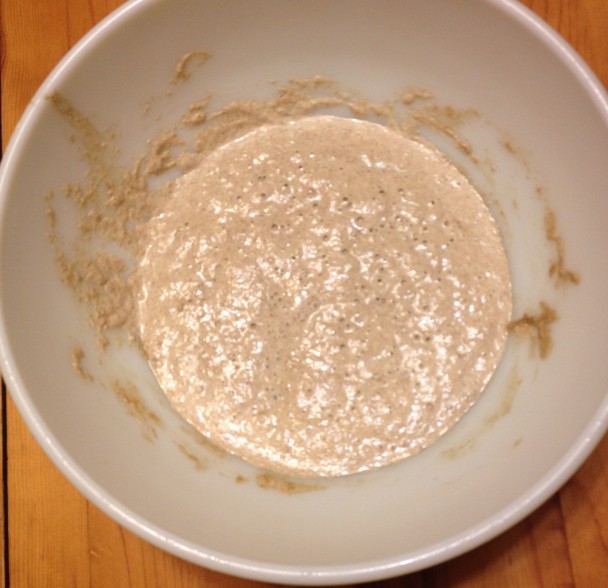
Day 5: Repeat process from day 3 and 4. Keep doing this every morning until it has that bubbly root beer float texture and smells slightly sour. I can’t give you an exact day count. It just depends. Below is a picture of how it should look. (I switched bowls part way through the process just for cleanliness, but this is the same start pictured above)
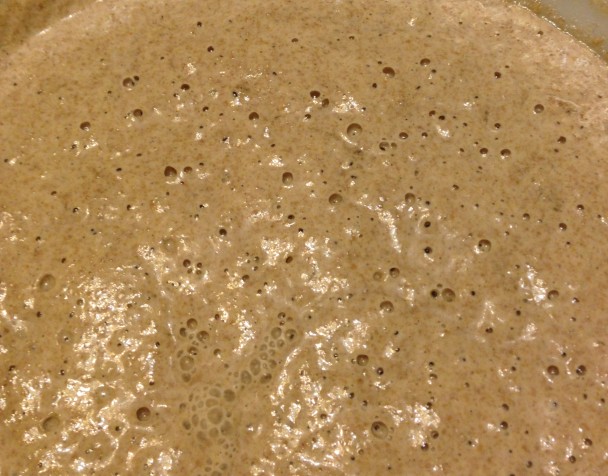
I have seen many things on the internet about how to make a sourdough start. You are welcome to try any method you choose. I am not suggesting that this is the only way to make it work, but this is how I got it to work. Good luck!

76 thoughts on “How to Create Your Sourdough Start Using Einkorn”
Hello friend,
I’ve purchased the book and the flour but keep growing fuzzy mold in my first 48 hours following the instructions. The first time the air conditioner was on and the ceiling fan was on and I don’t remember how sterilized my hands or other kitchen surfaces were but this second time the air in the house and been still for 24 hours and all surfaces and containers had been freshly cleaned with hot water and soap. I suppose for my next attempt I will be boiling my water and sterilizing all surfaces with vinegar.
Any input or suggestions?
Thanks
Jon, I’m sorry that is happening. First of all, what book are you referring to? Are you following instructions from a book or from this post? It depends on a lot of factors. I don’t know where you live, but the climate might have something to do with it. The start should be kept in a dry place at about 60-65 degrees. That’s why I kept it in a dark oven. I found that the counter didn’t really work for me, but like I said, there are a lot of factors. I would need to know more specifics about the procedure you are using.
What do you recommend for maintaining the starter? Feeding it the same amounts? Do you feed every 12 or 24 hours when not in the refrigerator?
Janet, the maintenance of the start depends on how often you plan on using it. You could feed it every 12 or 24 hours if you’re leaving it on the counter, but that means it will need to be used a lot. We feed ours a couple of times a week and keep it in the refrigerator to slow it down because we don’t need it everyday. As for what you feed it, that depends on how fast you want it to process. We do two cups of flour and one cup of water every time. The more you feed it, the longer it takes to process.
I just made my very first sourdough starter using whole grain einkorn flour. My recipe says to add 2 tablespoons water and 48 grams flour each time I feed my starter. This is for ten days. Then it says to add the same amounts to refresh it each week. That amount for refreshing is for making three loaves a week. There is also a refresher recipe for 5-6 loaves a week. I feel like this is a huge waste of flour. Especially in the first ten days when I add 48 grams of flour daily. Is there a way to make the amounts much smaller if I only plan on making one loaf a week, or maybe none. I want my starter to stay successful, but I know there will be some weeks that I won’t bake any bread at all. Thank you!
I was wondering this exact thing. How unfortunate your Q was never addressed. 🙁 … Being a newbie at making a sourdough starter (using Einkorn or any other flour), I feel SO confused. The idea of discarding half the starter seems so wasteful to me (glad to hear another suggested simply halving the recipe from the start. This makes more sense), but e-gads, what DOES one do with ALL of that starter if they’re only planning on making recipes (breads, waffles, pancakes, muffins) every now and then?
Dana and Andrea, as I mentioned, I adapted Dr. Price’s method, so I’m not sure all of the methods out there. I’m sure there are other ways. I don’t see why you couldn’t just make it smaller to begin with, but sourdough is not an exact science. The smaller the amounts, the faster it ferments, so the timing may be different if you choose to do that. You’ll just have to watch it. But you can always store a start in the fridge between uses and revive it when you’re ready to use it again.
I see. I believe it’s beginning to make sense. 🙂 Thanks so much.
I would like someone too help me make sour dough bread. I bought the starder now what? They said there would be directions here have not found any help
Hi Flo, thank you for your question. I’d be happy to help you. Do you have any specific questions?
There is no need to discard any starter. What a waste, and expensive. There are many recipes on the internet and in books for making pancakes and even muffins with starter, fed within the last 12 hours. I make lots of pancakes which freeze well, and often use them like sandwich bread.
Do you have einkorn pancake and muffin recipes using starter that you could share? Thanks!
you don’t have to throw out the discard , you can put it in the fridge and use it in discard recipes. the reason for the discard is to keep a manageable amount of starter.
The temperature you suggest of 60-65 degrees. Is that C of F? It seems too hot for C and too cold for F. Also, can you offer some guidelines for refreshing the start.
Thanks, Dave
The temp is 60-65 F. To refresh, scoop some of the start and place it with water an a few tablespoons in a new bowl, then leave on counter for 6-12 hours at room temp.
Would it work to halve the recipe at the beginning and then not have to throw out half the recipe for the remaining days?
Thanks
yes, that should work! Or you can freeze the loaves
Freeze the loaves… Are you talking about using the starter to make bread and then freezing that or freezing the starter?
Stephanie, yes I meant make more bread than you need in order not to waste start and then freeze loaves until you’re ready to use them. I apologize if that wasn’t completely clear.
I started a new start and mine has a more liquid consistency. I have try starting before with different grains and it was not like this. It seems like with Einkorn you need to use less water or a lot more flour when baking too. Have you experienced this? Should my ratio of flour to water be different so I can get a thicker start?
Ashley, as a general rule when baking with Einkorn, we recommend that you use about half the liquid you normally would. However, with the start, we go by weight to remove the guesswork. The reason it may turn out more liquid is because Einkorn is more easily digested – both in our bodies and in the start. The start matures more quickly. So, my advice would be to continue feeding it and just make sure you catch it earlier when you’re actually ready to start using it.
I took a recipe from The HealthyHomeEconomist, taken from Nourishing Traditions Cookbook for a sourdough starter using rye flour. She never removed any starter but just kept adding l cup of fresh flour plus 1 cup of cold water or a bit more each day for 7 days until the frothy stage begins to subside and the sourdough is ready for making bread. Will this start work with your sourdough einkorn bread recipe using 18 cups of flour? Appreciate your input. Anxious to try my hand at Einkorn bread after being gluten free for several years now. Blessings!
Marie, your rye start should be just fine in the recipe. The only reason for discarding half the start is so that you don’t end up with a massive amount of start. But, pretty much any sourdough start should be fine in the bread recipe.