
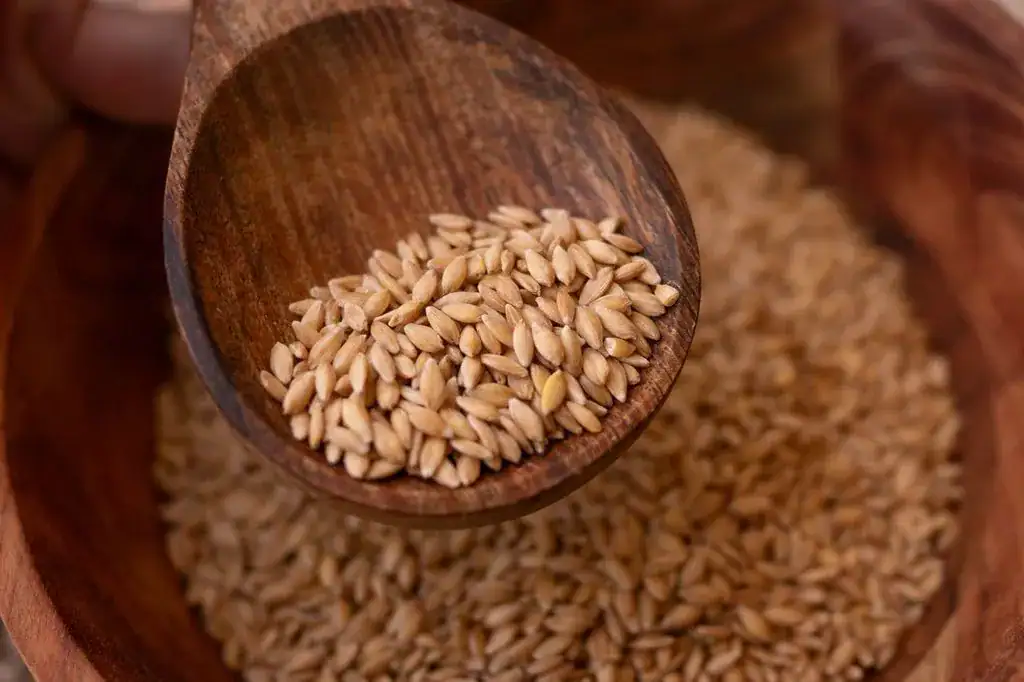

Our einkorn flour sold out in June 2026. Demand grew faster than we planned for, and when customers tell us why they switched to einkorn, most of them give the same reason: their health. Valeria is one of them.
When Valeria moved from Russia to the United States, she embraced the American way of eating. A few years in, she had fatigue, dangerously high cholesterol and debilitating migraines. After going on medications, and after reading Wheat Belly, she cut out wheat, and her migraines and cholesterol improved, but the wheat-free diet wore her down. “I felt like I was run down a lot, getting tired easily and getting sick often, like if my immune system was down. That really bothered me and didn’t seem right.” That’s when she tried einkorn. She went back to the fresh, natural cooking she grew up with, now with einkorn and rye in her recipes. When we first wrote this page, her migraines hadn’t come back, and neither had the run-down feeling from her wheat-free months. She writes about the way of eating that works for her on her blog, Beets ‘n Bones.
Stories like Valeria’s are why so many people try einkorn. So what are the real benefits of einkorn flour? Is it actually healthier than the flour most of us grew up on?
The research says yes, on most of the measures that matter. Grown side by side in the same fields, einkorn beat modern bread wheat on protein, vitamin E and lutein. USDA lists it with about twice the zinc of hard red winter wheat. And it carries almost none of the ATIs, the wheat proteins researchers link to non-celiac wheat sensitivity. In this article we’ll go through each benefit and the study behind it, explain what it means when you bake, and show you the few places where modern wheat still comes out ahead.
The short answer: Yes. Grown in the same fields, einkorn had 59% more protein, 46% more vitamin E and 483% more lutein than bread wheat. USDA lists 5.23 mg of zinc per 100 g, about twice hard red winter wheat. In lab measurements, einkorn has less than 5% of the ATIs found in other wheats, the proteins linked to non-celiac wheat sensitivity. In a randomized trial, einkorn sourdough bread raised blood sugar about 12% less than commercial wheat bread. It has a little less fiber than whole wheat flour, and it contains gluten, so it is not safe for anyone with celiac disease or a wheat allergy. See our full einkorn nutrition facts.
| Per 100 g (USDA FoodData Central) | Einkorn grain | Hard red winter wheat | Whole wheat flour |
|---|---|---|---|
| Protein | 15.1 g | 12.6 g | 15.1 g |
| Fiber | 8.91 g | 12.2 g | 10.6 g |
| Zinc | 5.23 mg | 2.65 mg | 3.24 mg |
| Phosphorus | 436 mg | 288 mg | 352 mg |
| Iron | 3.69 mg | 3.19 mg | not listed |
| Magnesium | 140 mg | 126 mg | not listed |
Einkorn has more protein than modern wheat
Grown side by side with bread wheat at four sites in Italy over two years, every einkorn tested had more protein: 59% more on average (Hidalgo et al., 2009). USDA’s numbers point the same way. Einkorn grain has 15.1 g of protein per 100 g, against 12.6 g for hard red winter wheat, about 20% more. USDA’s whole wheat flour entry is also 15.1 g, which is why the field trial, where both grains grew in the same soil, is the fair test. Across 65 einkorn lines, protein averaged 18.2% (Brandolini et al., 2008).
Protein doesn’t tell you how a dough will behave, though. Einkorn’s gluten carries about 6.5 parts gliadin for every part glutenin, against about 2.5 in common wheat (Geisslitz et al., 2019). Glutenin is what gives modern dough its strength, so einkorn dough is soft and sticky even though the flour is high in protein. We cover what that means for your baking below.
Einkorn is rich in lutein, and it survives baking
The golden color of einkorn flour comes from lutein, the same antioxidant pigment found in leafy greens and egg yolks. Einkorn has 3.5 to 3.7 times the lutein of bread wheat (Abdel-Aal et al., 2007), and a survey of 54 einkorns found 2 to 4 times the carotenoids of other wheats (Hidalgo et al., 2006). When researchers at Hacettepe University in Turkey measured einkorn landraces, they found 7.33 µg of lutein per gram and pointed to einkorn for high-lutein bakery products (Serpen et al., 2008).
It holds up in the oven, too. In a bread-making trial, einkorn breads kept 58% to 76% of their lutein and zeaxanthin, while wheat breads kept 16% to 20% (Antognoni et al., 2017). Einkorn also loses less of its carotenoids during kneading, so its breads, pasta and biscuits still carry far more than durum or bread wheat versions (Hidalgo, Brandolini and Pompei, 2010).
One correction while we’re here: lutein is not a source of vitamin A. Claims that einkorn has many times the vitamin A of wheat have no primary source behind them.
Einkorn has more vitamin E
In the same side-by-side field trial, einkorn had 46% more vitamin E (measured as total tocols) than bread wheat (Hidalgo et al., 2009). That carries through to the food you make. Einkorn bread and biscuits had about twice the vitamin E of bread wheat versions, and einkorn pasta had more than double durum pasta’s (Hidalgo and Brandolini, 2010).
In a lab study that cooked and digested pasta, einkorn pasta kept 57% of its vitamin E against 33% for durum pasta, and it fed beneficial bifidobacteria as well as a standard prebiotic did (Mercatante et al., 2025).
Einkorn is higher in zinc and other minerals
USDA lists einkorn at 5.23 mg of zinc per 100 g. That’s about twice hard red winter wheat (2.65 mg) and 61% more than whole wheat flour (3.24 mg). Einkorn also has more phosphorus: 436 mg per 100 g, against 288 mg in hard red winter wheat and 352 mg in whole wheat flour.
A field trial backs this up. Grown side by side, einkorn had more zinc, iron, manganese, copper, magnesium and phosphorus than bread wheat (Erba et al., 2011). In the HEALTHGRAIN screen of 175 wheat lines, einkorn carried more selenium than bread and durum wheat (Zhao et al., 2009).
Einkorn is gentler on digestion
Digestion is one of the main reasons customers tell us they switched, and three lab findings explain why.
- Almost no ATIs. In lab measurements, einkorn has less than 5% of the amylase-trypsin inhibitors (ATIs) found in other wheats. Researchers link ATIs to non-celiac wheat sensitivity (Geisslitz et al., 2020).
- None of the 33-mer. The 33-mer is the gluten fragment that sets off the strongest immune reaction in celiac disease. In tests of 38 bread wheat flours, every one contained it. In einkorn, it was below detection (Schalk et al., 2017).
- Gluten that breaks down further. In a lab digestion using real human stomach and intestinal juices, einkorn released 38 immune-triggering gluten peptides, against 144 and 155 for the two highest common wheats (Asledottir et al., 2020).
Einkorn is not low in gluten. Grown side by side, it had more protein and gluten than common wheat at all four test sites (Geisslitz et al., 2019). Its gluten is built differently, and it comes apart more completely. It is still not safe for anyone with celiac disease or a wheat allergy. We go through all of the digestion research in is einkorn easier to digest?
Einkorn sourdough is easier on your blood sugar, and more filling
In a randomized crossover trial, 16 healthy adults ate four breads with the same 50 grams of carbohydrate: a commercial par-baked wheat bread and three sourdoughs made from commercial wheat, organic wheat and organic einkorn flour. Einkorn sourdough gave the lowest blood-sugar response of the four, about 12% lower than the commercial bread. People felt almost twice as full after it as after the commercial bread, and their ghrelin, the hunger hormone, came in lower. The researchers concluded the einkorn bread “induced the least disturbance in carbohydrate homeostasis and the greater satiety” (Bo et al., 2017).

When we first wrote this page, Cheryl Najafi, then CEO of Everyday Dishes and author of Mother Daughter Dishes and You’re So Invited, put it this way: “You literally cannot eat as much of it.”
Einkorn is still a carbohydrate-rich grain. USDA lists einkorn grain at 68.7 g of carbohydrate per 100 g, against 71.2 g for whole wheat flour. The benefit shows up in how your body responds to the bread, and long sourdough fermentation is part of it.
The only published glycemic index for einkorn bread comes from a study of four pigs. Nobody has published one in people, so ignore any human GI number you see for einkorn. The human number to use is the 12% from the trial above.
What these benefits mean when you bake
I write our baking tips, and here is what these numbers mean when you bake with our flour.
- Fresh flour. We mill our flour after you order it, on milling days a few times a week, and ship it the day it’s milled. The mill date is printed on every bag.
- Stone milled on our farm. Our einkorn mill only makes einkorn flour. We don’t run any other grain through it.
- Two flours. Our all-purpose einkorn flour is sifted and keeps 85% of the whole grain. Our whole grain einkorn flour is 100% of the grain. Both are unbleached and unbromated, with no additives.
- Organic and glyphosate-free. Our einkorn is certified 100% USDA Organic. It is never sprayed with glyphosate, and we test our berries for it. See how einkorn is grown on our farm.
Einkorn’s softer gluten does ask for a different hand. Use less liquid than a modern-flour recipe calls for: hold some back and add it as the dough comes together. Knead very little. Let the dough rise less, because einkorn dough can collapse if you leave it to double. For pancakes, waffles, muffins and banana bread, you can swap whole einkorn flour one for one into a regular recipe with no other changes. Our tips for baking with einkorn flour and einkorn flour substitution guide walk through the rest.
Where modern wheat still comes out ahead
- Fiber. Einkorn has a little less: 8.91 g per 100 g, against 10.6 g in whole wheat flour (USDA).
- Fructans. Einkorn has more fructan, a fermentable carbohydrate, than bread wheat (Brandolini et al., 2011), and it had the highest FODMAP content of five wheat species tested. The fix is fermentation: letting dough proof for more than 4 hours cut the FODMAPs in bread by up to 90% (Ziegler et al., 2016). So bake einkorn as sourdough, with a long proof. Start with is einkorn good for sourdough?
- Phytic acid. Einkorn has more phytic acid than modern wheat, and the same study found long proofing or sourdough cut it the most in the finished bread (Longin et al., 2023).
- Rise. Einkorn’s dough is weaker, so loaves come out lower and denser than modern bread flour loaves.
Who should not eat einkorn
People with celiac disease. Einkorn contains gluten, and it is not safe for celiacs. We always recommend that people with celiac disease don’t eat gluten, einkorn included. More in is einkorn gluten-free?
People with a wheat allergy. Einkorn is wheat, and it is not safe for you.
For everyone else, einkorn gives you more zinc, phosphorus, vitamin E and lutein than modern wheat, and more protein than bread wheat grown in the same fields. If you want to see it for yourself, start with our organic einkorn flour, or compare the grains side by side in einkorn vs modern wheat.
Frequently asked questions
Is einkorn flour healthy? Yes. Grown in the same fields as bread wheat, einkorn had 59% more protein, 46% more vitamin E and 483% more lutein, and USDA lists about twice the zinc of hard red winter wheat. It also has almost none of the ATIs, the wheat proteins linked to non-celiac wheat sensitivity. It contains gluten, so it is not safe for anyone with celiac disease or a wheat allergy.
Is einkorn flour healthier than whole wheat flour? On minerals and antioxidants, yes: 61% more zinc, more phosphorus (436 mg against 352 mg per 100 g), and several times the lutein. USDA lists the same protein for both (15.1 g per 100 g). Whole wheat flour has more fiber: 10.6 g against einkorn’s 8.91 g.
How much protein is in einkorn flour? USDA lists einkorn grain at 15.1 g of protein per 100 g, about 20% more than hard red winter wheat. Across 65 einkorn lines, protein averaged 18.2%. High protein doesn’t mean strong dough: einkorn’s gluten is low in glutenin, which is why its dough is soft.
Does einkorn flour have fewer carbs than whole wheat flour? Only slightly. USDA lists einkorn grain at 68.7 g of carbohydrate per 100 g, against 71.2 g for whole wheat flour. Where einkorn differs is the blood-sugar response: einkorn sourdough bread gave about a 12% lower response than a commercial par-baked wheat bread, the lowest of four breads tested.
Is einkorn good for weight loss? Nobody has run a weight-loss trial on einkorn. In the randomized trial above, einkorn sourdough bread almost doubled how full people felt and lowered ghrelin, the hunger hormone, compared with a commercial par-baked wheat bread. As Cheryl Najafi put it, “You literally cannot eat as much of it.”
Is einkorn flour good for diabetics? No trial in people with diabetes has been published. In healthy adults, einkorn sourdough bread produced about a 12% lower blood-sugar response than a commercial par-baked wheat bread with the same carbohydrate, the lowest of four breads tested.
Does einkorn flour cause inflammation? Nobody has measured it in people. In lab tests, einkorn’s ATIs did not raise inflammation markers in celiac gut tissue the way bread wheat’s ATIs did (Iacomino et al., 2021), but einkorn proteins did switch on inflammatory genes in human immune cells (Dieterich et al., 2022). For celiacs the answer is yes: einkorn’s gluten triggers the celiac immune response, which is why celiacs must avoid it.
Is einkorn flour gluten-free? No. Einkorn contains gluten and is not safe for anyone with celiac disease or a wheat allergy.
