
Since I started baking with Einkorn Flour, I’ve learned a thing or two, and I’ve decided to share my tips. For many of you, this is the post you have been waiting for so I hope you enjoy!
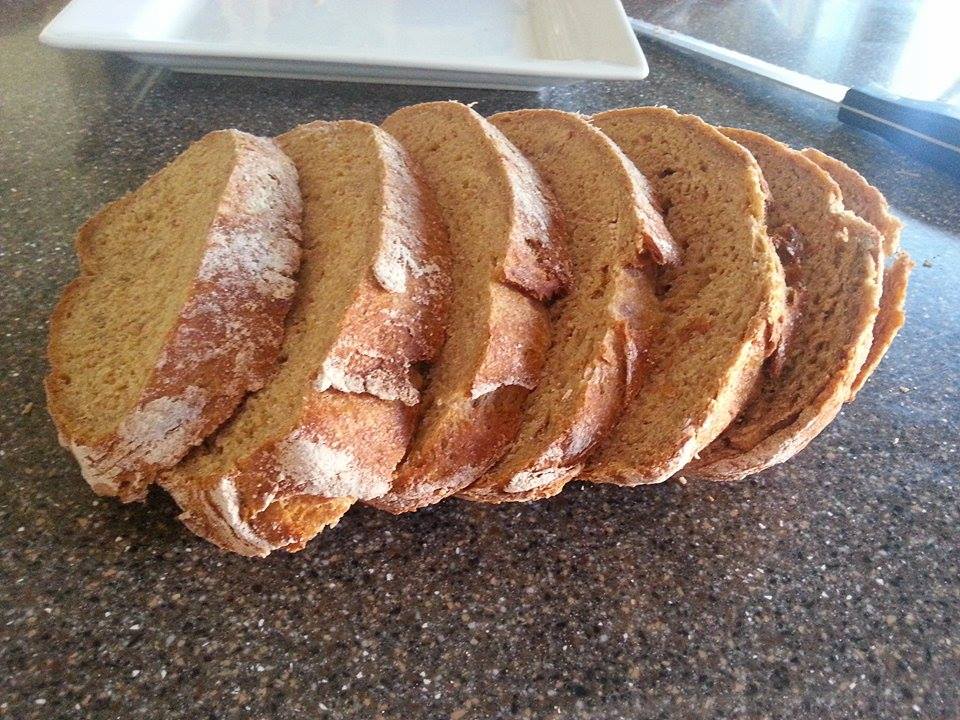 Baking with einkorn flour requires some tweaks but the health benefits of einkorn are worth it, and my persistence is paying off!
I’ll show you how I mill einkorn flour, adapt recipes for einkorn, make white einkorn flour, and add a lovely artisan crust to my einkorn breads.
Before I share my tips, keep in mind that whole wheat flour is simply wheat berries that have been milled into flour. The white flour thatyou buy at the store is whole wheat flour that has been sifted to remove the bran and germ. And if the label says “bleached white flour,” that means the white flour also has been chemically bleached (yuck!) to make it whiter and improve the shelf life. White flour is also sometimes referred to as high extraction flour.
Remember also that any flour made from modern wheat has been hybridized many times to, among other things, increase it’s rise. Unfortunately, this also means it has a different type of gluten than the original wheat and it is more difficult to digest.
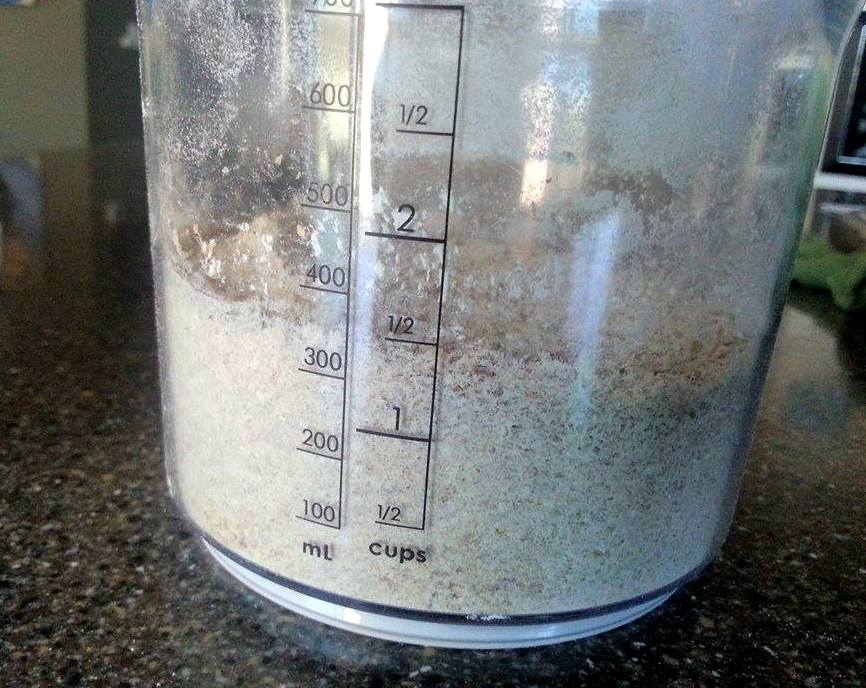
Tip #1: How Much Flour Does One Cup of Einkorn Berries Make?
When I grind Einkorn myself ( I have a kitchen aid attachment) 1 Cup of Whole Einkorn Wheat Berries = about 1 1/2 Cups of Einkorn Flour.
Tip #2: Adapting Quick Bread Recipes
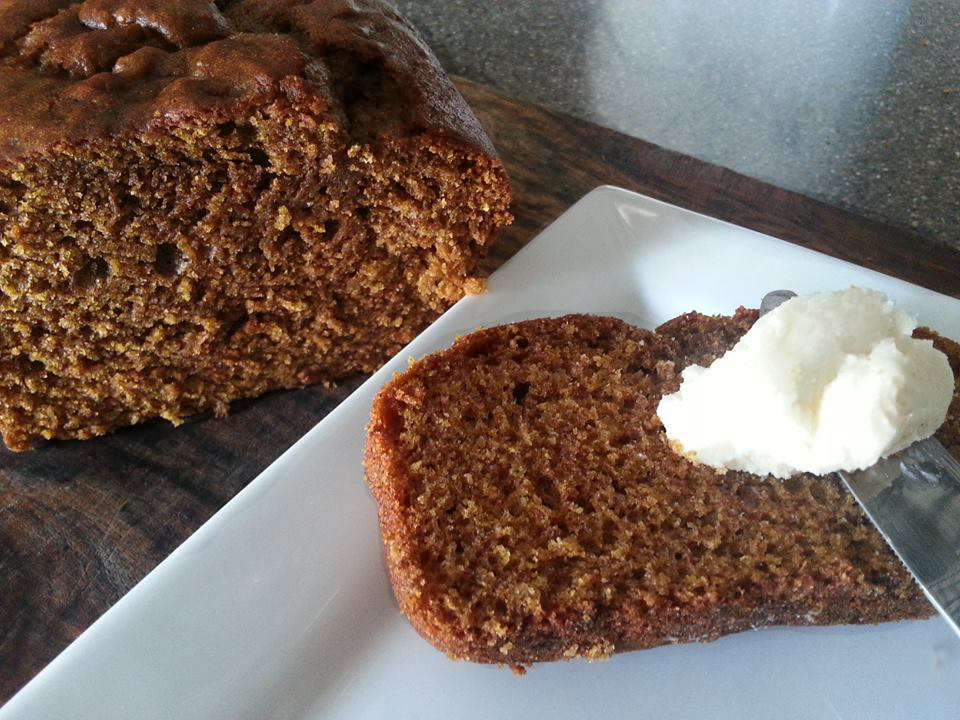
You can use whole Einkorn flour exactly as a recipe calls for if it is used for a quick batter type bread. Pancakes, waffles, muffins, and banana type breads. Anything you do not have to shape. You DO however need to check your baking powder, because if it’s expired, you won’t get a good rise with einkorn flour.
Tip #3: Adapting Dough Bread Recipes
If you are making a dough type bread – use 1/3 less liquid than it calls for in the recipe. It is more important to use less liquid rather than using MORE flour. You’ll be tempted to add more flour but don’t because when you add more flour you throw off the balance of the flavors…and lose the wonderful taste.
The comparison below shows what happens when I use too much liquid in my einkorn recipe.
You’ll see my picture of dinner rolls baked with modern white flour as well as dinner rolls baked with ancient whole einkorn flour – but with different amounts of water – so you can compare the finished product.
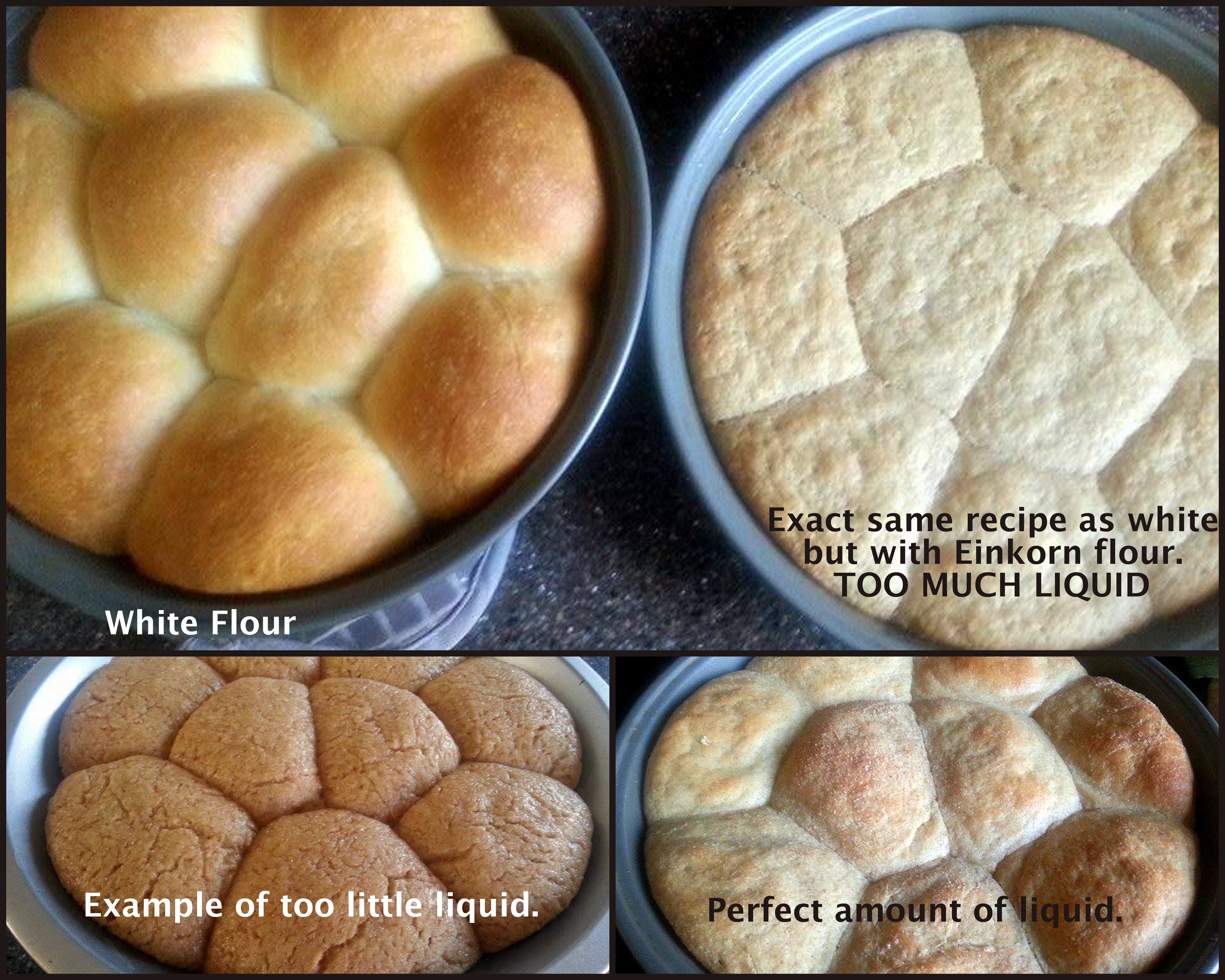
If your recipe calls for and egg, and or butter; don’t count these as liquid. Only use 1/3 less of the actual pourable liquid such as water.
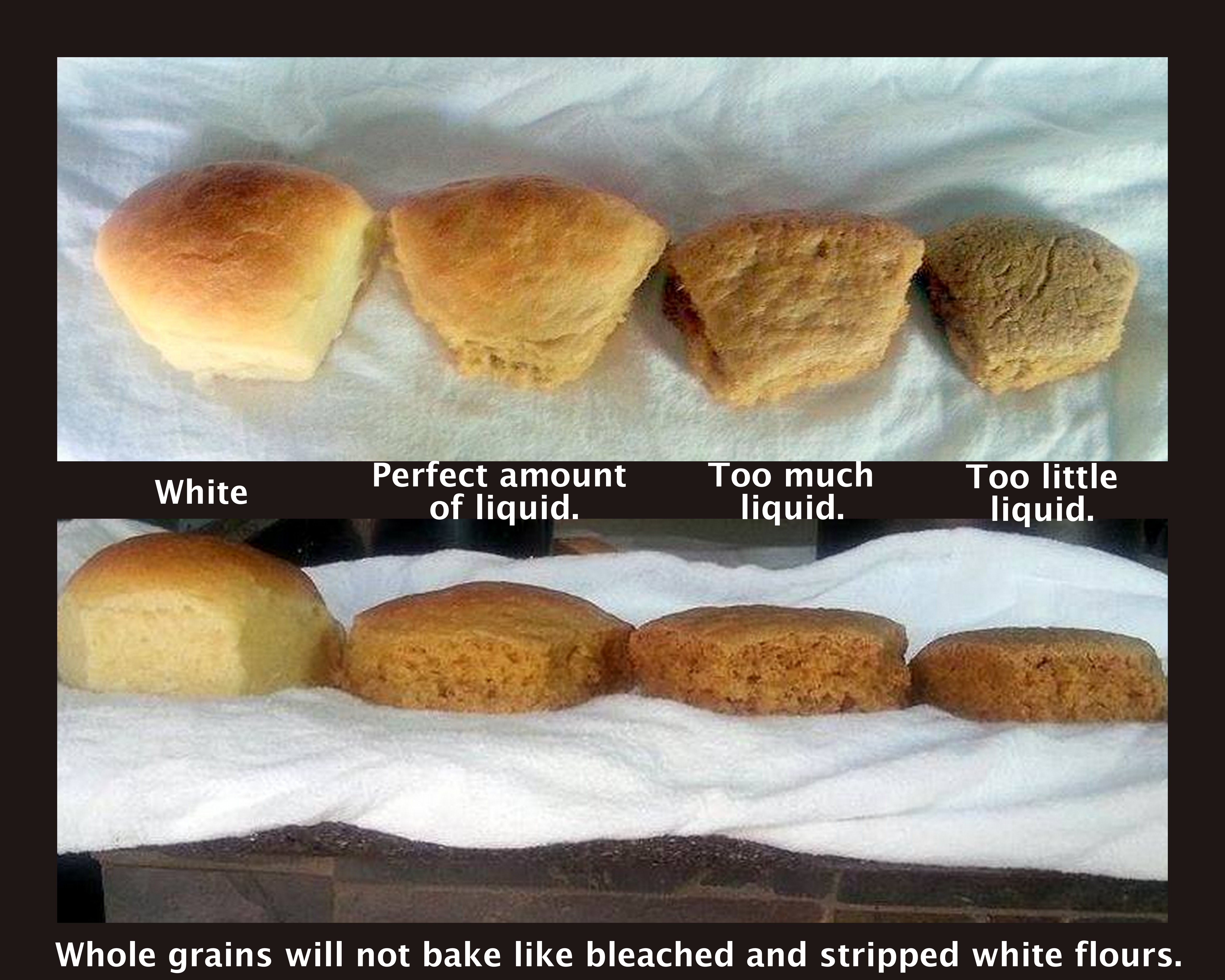
If you are grinding your own Einkorn, do not expect it to rise as high as modern white bread. This is true with all whole flour breads.
Because Einkorn has a completely different type of Gluten than modern wheat, it does NOT need to be kneaded very long at all. I knead mine in the mixer on low for 4 minutes.
Tip #4: Making Your Own “White Einkorn Flour”
As you may know, when you mill einkorn berries into flour at your home, you are making what is known as “whole grain einkorn flour”. It tends to be a bit dense, which is great for just about everything, but if you want to bake something lighter, you should use what is commonly called “white einkorn flour”. White flour isn’t the best name for it because true white flour has been bleached.
Our “white flour” has not been bleached or treated in any way so we call it All-Purpose Organic Einkorn flour, and you can buy it from us here, or you can make your own using the instructions below.
To make “White Flour” at home…
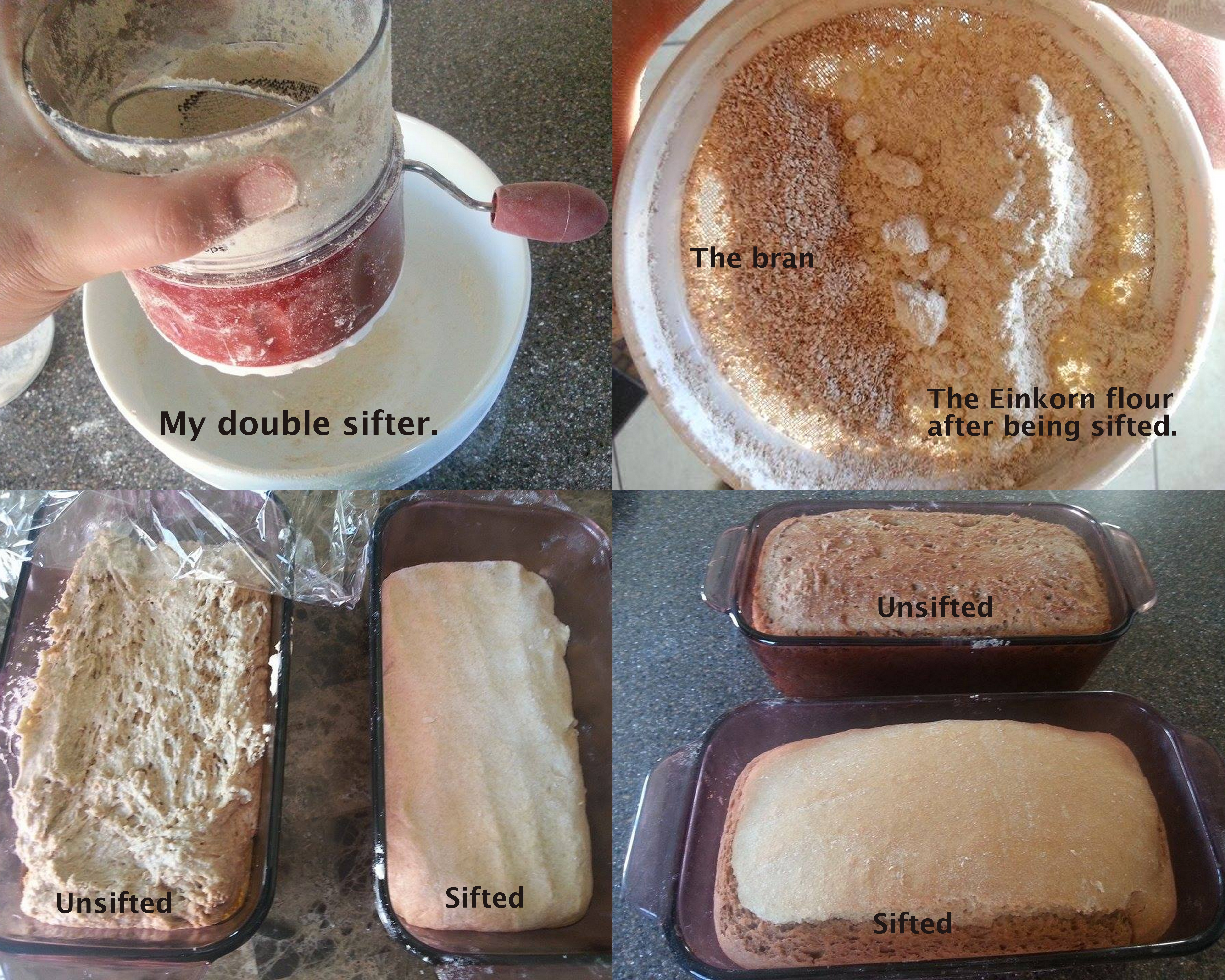
After you grind your own whole Einkorn flour, you will want to us use a double sifter (which has two sifters at different sizes on top of each other) and the bran will be held back leaving you a white flour that bakes lighter in color and density. Note: grind your wheat on medium fine to do this.
This is a flour sifter much like the one I use. (affiliate link)
I love this because I don’t have to worry about my white einkorn flour being treated with chemical bleach (yuck!).
White Einkorn flour is great for making cinnamon rolls, dinner rolls, or even for your bread but keep in mind that it is not as healthy as whole Einkorn flour. SAVE that beautiful bran! It’s healthy for you because it adds nutrients and fiber to your diet. You can even add it to the top of your breads.
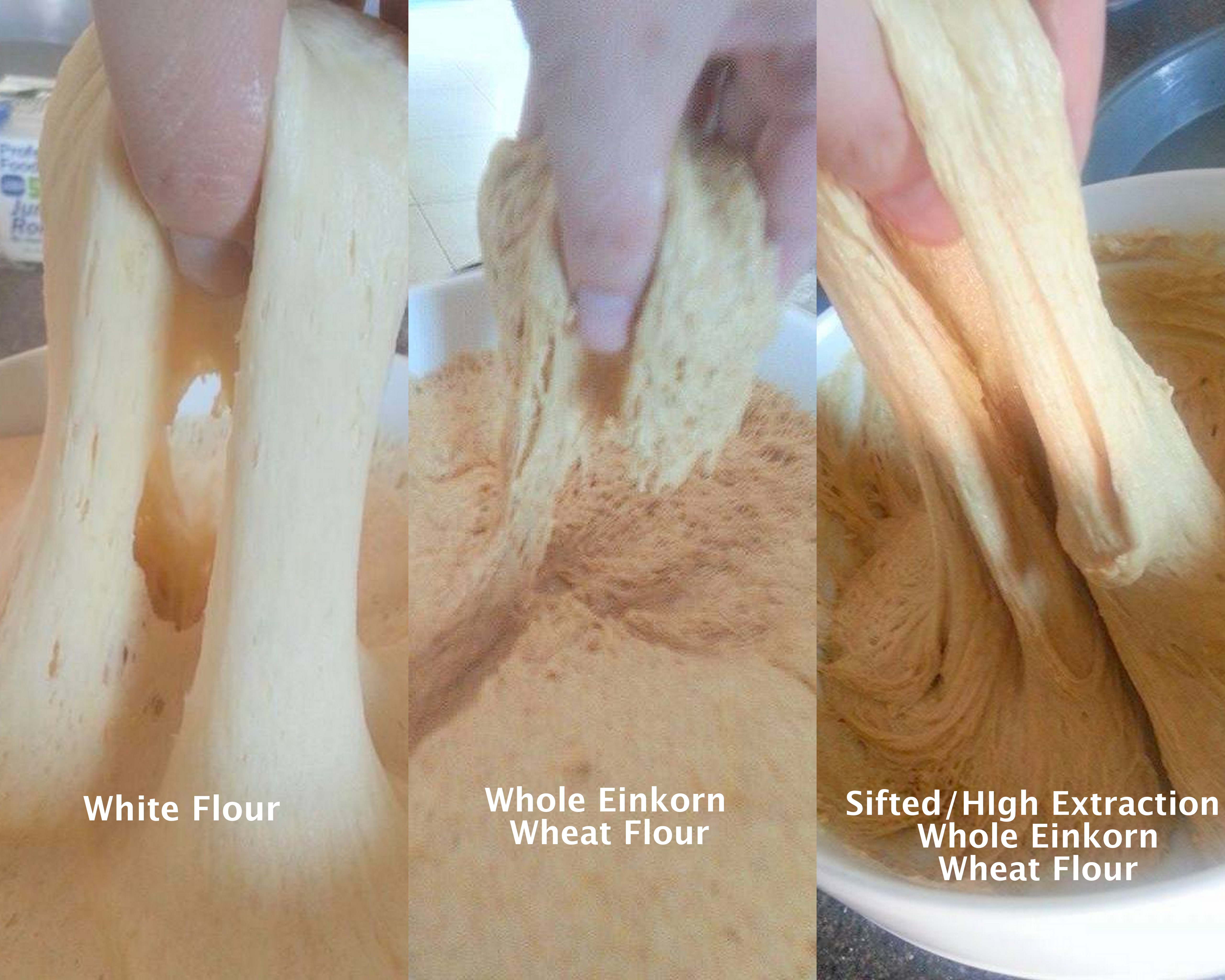
The pictures below demonstrate the difference in dough made from white flour vs whole einkorn flour vs white einkorn flour.
Tip #5: Softening Kneaded Bread
Add the same amount of white vinegar as yeast, plus powdered milk (double the measurement of vinegar), plus approximately 1/4 cup of potato flakes for every 2 1/2 cups of whole Einkorn flour. So, if you use 2 Tbsp yeast, then you’d use 2 Tbsp. vinegar, 4 Tbsp powdered milk, and the appropriate amount of potato flakes.
Tip #6: Adding Artisan Crust To Your Einkorn Bread
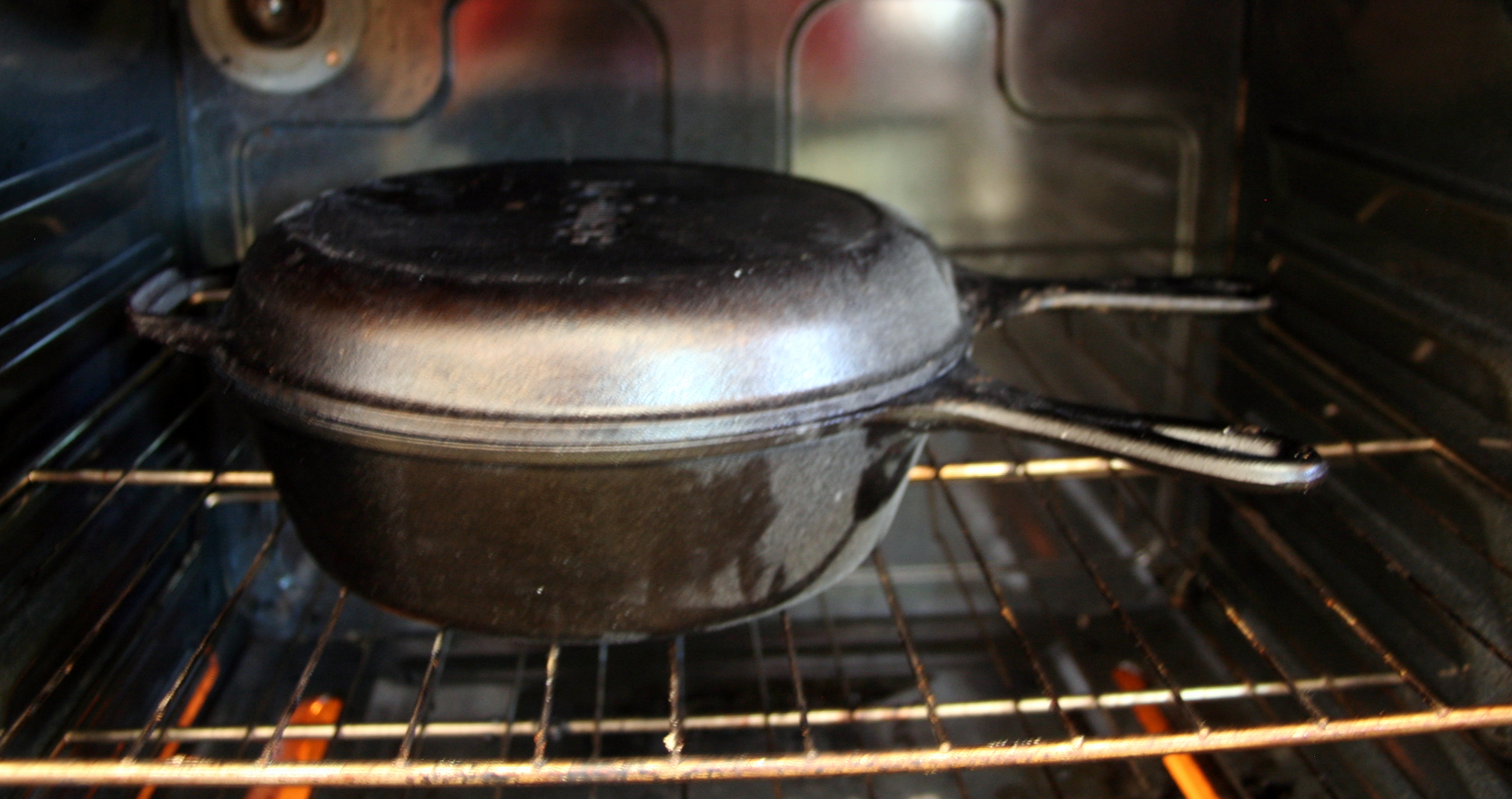
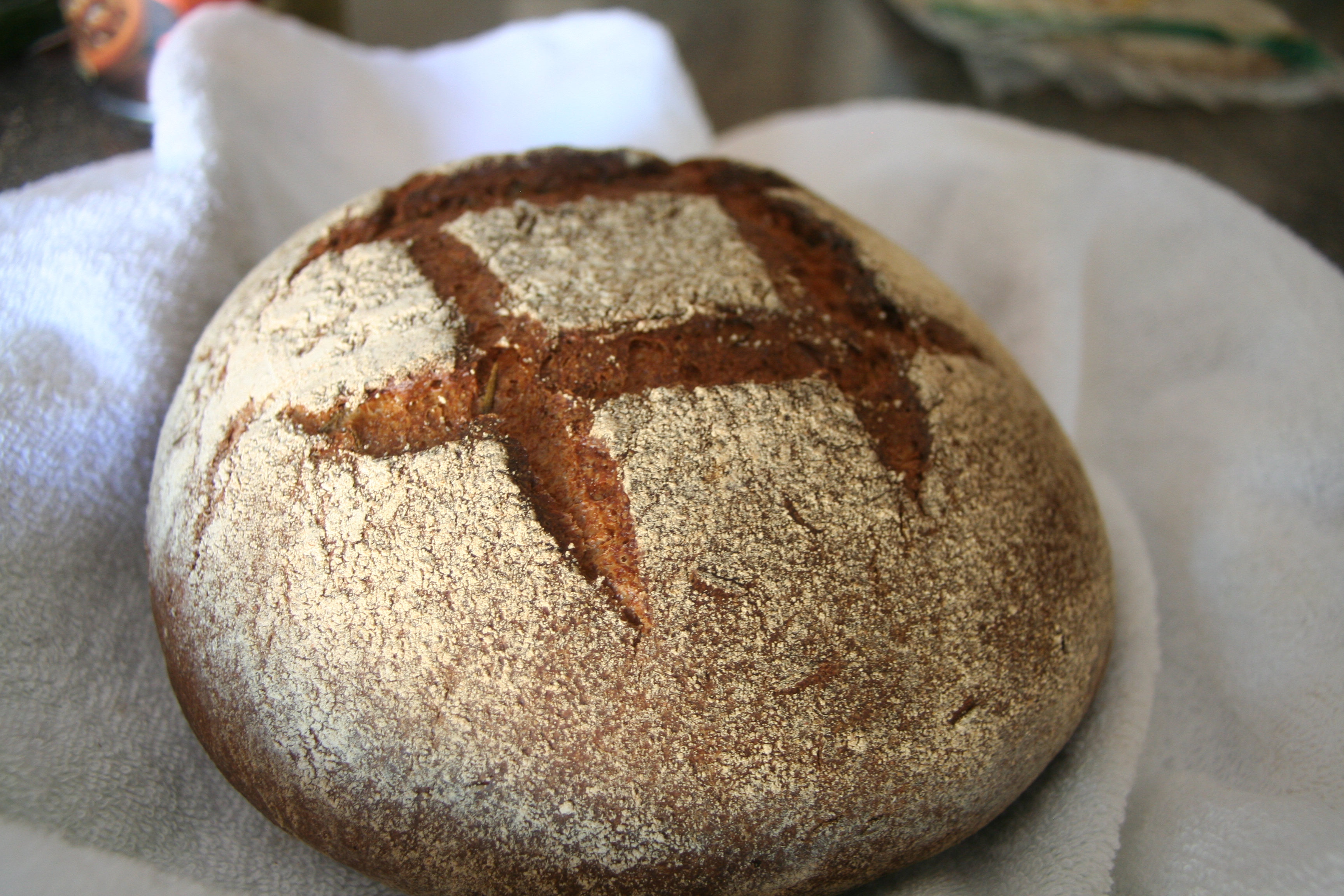
If you want a hard Artisan Bread type crust, bake it in a dutch oven. Make sure you cut slits with a very sharp knife or razor, in the top of the bread so it can vent properly. Or it will choose where to vent itself and be lopsided. Preheat your dutch oven in with the oven as it preheats to 500 degrees. Then drop it to 450 when you put your bread in it. Make sure you place the lid back on while it bakes. Let it bake 30 minutes, then remove the lid. Then bake to desired brownness.
I have been baking sourdough einkorn sandwich bread for several months. It just crumbles. I would like to try making hamburger buns or rolls or something that might make a better sandwich. Would this recipe work for that?
Hi Judy, I sometimes reshape my bread recipe into buns and that works for hamburgers. If your bread is crumbly, you may consider adding less flour. It’s ok if the dough seems wet. For einkorn, that’s actually better.
Judy, I also made several crumbly sourdough einkorn sandwich loaves before finding one that is bendy and beautiful. It is a recipe from the paid sourdough course from “a modern homestead.com” It costs money but has definitely been worth it for me. The other recipes included in the course that I’ve tried are wonderful as well: sourdough einkorn chocolate cake, sourdough einkorn donuts, sourdough einkorn artisan bread etc. The sandwich bread has a lots of steps but they’re simple. The course also includes step by step videos for every single recipe so you know if you’re doing it right, which I found very helpful when baking with einkorn because it’s so different.
Hi! I bought some einkorn flour with some other kinds from a family mill, but I realized today that I only have 3 cups worth. All the recipes I’m seeing have 3 and 3/4 minimum. Can I add regular all purpose or whole grain flour to make up the difference, or are they too different?
Hi Bethany, yes you can use another flour with it. Just watch the consistency. It may affect the liquid a bit.
I am doing my research into switching my baking into using Einkorn . Is tip #5 an essential step?
Hi Ashley, It is not essential. These are just suggestions that may help the finished product.
Hi, I bought some berries a long time ago. They are stored in paper sacks they arrived in and one has been opened. How long are they safe to use?
Thanks,
Theresa
Hi Theresa, the berries will last for years if stored cool an dry. If there are no visible issues and they don’t smell rancid, they should be just fine!
Hello!
I love all the information in this post. It is very helpful!
What White Bread Recipe would you suggest using?
I cannot find any that include tips you have included in this article.
Hi Starre, you are welcome to try some of these tips in any recipe. This is our white bread recipe: Basic White Einkorn Yeast Bread.
Thank you so much for your Einkorn baking tips. For the past 5 months, because of having to switch for health reasons, I have been making yeast bread (usually for sandwiches) with home-milled, sprouted Einkorn berries , well-sifted, plus all-purpose Einkorn flour . For years, I baked with home-milled whole wheat red winter wheat, white wheat and/or spelt; never had any problems getting nice lofty loaves. I am not expecting the same pleasant “kneadability” or “loft” with Einkorn, but I have been having one failure after another. We have been toasting and eating the failures (all such good ingredients!);, but I would dearly love to bake loaves like yours. I have been careful not to let the dough rise too much on its second rising, but still it collapses in the oven — and regardless of my trial-modifications of the oven temperature. Also, the bottom 1/2 inch or so of the loaves is not risen at all; just wet, even though I am using recipes designed (liquid-wise) for Einkorn bread. Any further ideas???
Hi Patsy, thank you for your question. We are experienced with failed bread! We have learned some things since this post. I’ve found that it’s important that the dough be pretty wet, even if it’s difficult to work with. Oil or water your hands. An easy recipe to get you started is this one. I modify it slightly for our berries. I use 2.5 cups of our einkorn berries for one loaf. I also triple the salt. It’s quite bland otherwise. I have found that the more you work with einkorn, the more intuitive it becomes. You get use to how the dough needs to feel. It can be frustrating in the meantime. I hope that recipe helps get you started.
I’m brand new to this whole concept do you have tutorials?
Thanks,
Paula
Hi Paula! Thank you for your question. Unfortunately, we do not have video tutorials. I’d be happy to answer any questions you may have.
Hello,
I am “trying” to make the perfect baguette. So far, none of the recipes I’ve used are perfect (I want a crunchie crust and a bit thicker crust as well as that French baguette smell and color).
If I use einkorn for my poolish, will it give my baguettes these qualities? Do I use less water than my typical poolish recipe which is – 113g water, 1/16 tsp yeast, 120g AP flour?
Will the einkorn flour give me a more authentic baguette crust & flavor?
Thanks for your help!
I have not tried that specifically. Einkorn can achieve all the qualitites you mentioned, but I don’t have a recipe for you. Einkorn will behave differently than modern wheat in recipes, so you’ll need to watch consistency and probably use a little less liquid.
Can I use Einkorn flour to bake cakes and cookies and what proportion of liquid to flour. Are there any precipices and I also would like to get Einkorn pasta. I live in Canada, Ontario (Toronto) they don’t seem to have any PASTAS made from this flour.
Thank you for your help!
Hi Helen, yes einkorn can be used for cakes and cookies. I would suggest starting with recipes written for einkorn. It is a wetter grain that wheat, so when adapting recipes, I’d decrease the liquid by about a third and watch consistency from there. Here are some pasta recipes from our website:
Fresh Einkorn Pasta from Savor the Best
Einkorn Noodles in Chicken Soup
I’m trying to acclimate my husband to the taste of Einkorn. I think I’m going to have to mix flours to ease him into it. I grind my own flour. Do you have any suggestions for a good blend? Thanks Mary Ann
Hi Mary, if you are wanting to avoid modern wheat, I sometimes mix my einkorn with spelt and that works well. My husband and I love the flavor of einkorn, so that’s not why I do it. Beacause of that, I haven’t paid too much attention to how different the flavor is when I do that, but it’s something you could try.
I like your suggestion of mixing in spelt with your einkorn. What ratio do you suggest?
Thank you, Tina
Hi Tina, You can probably make whatever ratio you want work. 2 cups spelt for 3 cups einkorn works very well.
I have been cooking with Einkorn AP flour. I now want to convert my recipes to Einkorn whole wheat. I was told to increase my liquid by 5% when using the Einkorn WW but I don’t know how to figure out how much flour I will need? If a sandwich loaf calls for 2 3/4 cups of AP Einkorn, how much do I figure when using Einkorn WW instead? Is there a standard formula as there is for the liquid? thanks!
Hi Amy, thank you for your great question. Unfortunately, I don’t have a standard formula. I always use whole grain and I never change it noticably. I use the same amount of flour and liquid that it calls for and then adjust if I feel the consistency isn’t right for what I’m doing. I wish I had something more concrete for you. So much of our baking is trial and error.
Amy, get a scale and weigh your ingredients. You’ll find it much easier to adjust amounts of liquids, etc if you’re using the same measure for all ingredients, whether it be ounces or grams.
I am very interested in baking breads rolls etc. with einkorn flour. My question is I have purchased an einkorn all purpose flour. I believe this to be different from einkorn berries that are ground into flour. How different if any and shall I use less water with my recipes?
Hi Karen, in my experience, you can mostly use the all-purpose einkorn flour and the whole grain einkorn flour interchangeably. You may need to adjust slightly. The whole grain may produce slightly denser products and there will definitely be more flavor. I use the whole grain for everything and have been really happy with it, but if you prefer all-purpose, you can use it in any recipe that calls for whole grain and it should work about the same. As with all baking, you’ll want to watch consistency rather than be too committed to the exact measurement.
So excited to discover Einkorn flour! Can’t wait to try my first recipe!!!
I have a Mockmill 100, what setting do you recommend I grind my wheat at?
Hi Lori, I recommend the finest setting. Go until you hear the faint ticking of the stone. If you need help calibrating it, see this video.
I’d like to divide my dough into fourths for the last rise and bake mini boules. The recipe I’m baking uses 6 cups of flour and 2 cups of water (sharing that information so you have a sense of quantity if that helps you help me!) How long do you think I should bake 1/4 of that dough for?
My recipe preheats the dutch oven at 500 then down to 450 when adding the dough, baking for 40 mins with cover on and adding additional minutes for desired browning.
I can’t find a specific recipe for hard crust rolls anywhere but I was thinking if I could, I would find the answer. Well, here I am because I couldn’t. Thanks!
Hi Valerie, it’s hard to say not having done it. I would estimate 12-15minutes. That’s what you do for hamburger buns. I know these aren’t exactly the same things, but a similar quantity of dough. If they’re a little bigger than hamburger buns maybe add a couple minutes. We’d love to hear how it turns out. Thank you!
What is the difference between sprouted and unsprouted Einkorn berries? Is there any change in the recipes?
Hi Vickie, unsprouted just means the regular berries ready to be ground into flour. If you sprout the berries, you will soak and rinse them for a couple days until they germinate and begin to sprout. Then you will dehydrate them before they can be ground into flour. We do not sell sprouted berries, but I imagine the recipe would not differ using sprouted flour vs non sprouted flour.
What suggestions do you have for making biscuits? I’ve tried just using my normal biscuit recipe (I use oil). They turned out pretty good, just a little crumbly.
Hi Ginger, I have found that my biscuits turn out best when I use a lot of cold butter. I mix it with my fingers until it’s crumbly. There should still be chunks of butter. Then I roll in out, fold it, and roll it again. I repeat this process several times. This gives them layers and causes them to puff nicely. Once I have them cut out and in the pan, I usually refrigerate the pan for awhile, at least while the oven preheats. Biscuit dough wants to be cold. If it isn’t or there isn’t enough butter, you won’t get that flaky texture. I hope that helps!
I am attempting to make Jovial’s Einkorn easter bread. Working with enriched doughs in the past, I’m used to kneading for forever. I cut down my kneading time to only a few minutes. I’m wondering if even just that much kneading ruined my dough?
Hi Taylor, I’m not familiar with that recipe, but it’s ok to knead a little. The more important thing is not overflouring. That will give you a dense, crumbly finished product. Our einkorn bread dough is quite wet which makes kneading difficult, and we’ve found that it’s not really necessary for many things, but some kneading can help develop the gluten and give you a good rise if you don’t have too much flour.
I usually knead my bread for about 8 minutes. Is that too long for Einhorn dough?
Hi Claudia, we have found that overkneading it a problem for einkorn. Depending on the recipe, sometimes I’ve been able to knead longer, and sometimes it’s best just to combine the ingredients and stop there. Kneading by hand is generally difficult with einkorn because it tends to be sticky. If you’re using a mixer, I’d just suggest experimenting with times.
Hi!
I bought a mill and a bread machine. I’ve been milling my own einkorn flour and trying my hardest to get my recipe right. I have had 5 loaves in a row collapse on me. I’m so sad and disheartened. I’m going to list my recipe here. If you see this can you please tell me what to change to get this to work. I do not want to sift my flour. I want the whole grain being used.
1.5 cups water
1/2 cup oil (1/3 if using egg)
1/4 cup honey
4.5 cups flour
2 tsp salt
2 tbs lecithin
1 egg (optional)
1tbs yeast
I see above that you said to use 30% less water. I will definitely try that. Do you recommend anything else considering I’m using a bread machine? The setting are set to 20 minutes kneading time!! Yours says 4 minutes.
Please help!
Hi Brittany, thank you for your question. We’ve definitely had our share of failures while learning to make einkorn bread. My difficulty in answering your question comes from a lack of experience with bread machines. We have never used one, so it’d difficult for me to accurately troubleshoot. As a general rule, I have found that you want einkorn bread dough to be a little wetter than you’d think. If it’s over-floured, it will be dry and crumbly. Also, the gluten in einkorn is different from the gluten in modern wheat. It is a weaker gluten. It will rise but the dough probably won’t double like wheat bread dough will. So if you let it rise too long waiting for that, it may fall. It may be good to find a bread machine recipe written for einkorn. I found this one. Like I said, not having ever used a bread machine, I can’t vouch for it. But it should give you a good starting point. Let me know if you have more questions.
a lot of people have serious health issues due to gluten. that is why einkorn is the only flour to use for good health. modern wheat was introduced 50 years ago and was developed for long term shelf life not for any good reason but to make more money for the baker. most of our food supply in fact all gmos and processed foods everything almost has added bromines in it. detrimental to health.
best to buy 48 pounds of einkorn berries for a decent price. its not much more expensive than modern wheat in that quanity
I’m just getting started and want to use a hand crank mill to grind my berries. Is there one you could recommend?
Hi Emily, the best on the market would probably this one. You can go to that link to look at reviews and specifics.
Have you ever added gluten to a batch of einkorn bread? I have always added about 1/2 cup of gluten to 5 loaves of bread made with wheat flour that we grind ourselves.
Dorothy, we don’t do that because the type and amount of gluten is one of the reasons we love einkorn so much. It’s so much easier on the digestive system. But you could add gluten if you wanted to.
Thank you for the tips and public comments…very helpful. I’ve only tried Einkorn pancakes and one loaf of bread so far. The pancakes were successful but the bread was rather dense and dry. Looking forward to recipes.
Hi Kirstina, we’ve had our share of dense bread! We have learned some things along the way. If you have any questions, feel free to ask!
Great tips – thank you. I am new to milling einkorn.
I am trying to find an English muffin bread recipe using Einkorn flour but have had no luck – can you help ?
Hi Deb, we have a couple. Look at these:
Easy Einkorn English Muffins
Einkorn English Muffins
I needed the ENGLISH MUFFIN BREAD recipe not muffins , but thanks !
Is there a trick to slashing deeply. My razor just drags on the wet loaf, the cut closes up and never seems deep enough. Otherwise, I love my baguettes although not took several tries to get the process down. Thank you, Marcia
Hi Marcia, is it possible your razor is dull? I usually use a serrated edge knife. It works better for me than a straight edge.
I can only tolerate einkorn wheat and buy and mill wheat berries in my NutriMill, I also sift out the bran for lighter recipes, but my husband is allergic to milk. What to you recommend to replace powdered milk in your recipes?
Hi Mary, I’d suggest that For every 1/4 cup of milk powder you substitute 1 cup of a milk substitute. You’ll also want to reduce the original amount of liquid in the recipe by a cup.
Thank you so much for this page! I was wondering what I have been doing wrong, your help has saved me many more headaches 🙂
I made enkorn sandwich loaf using a homesteader’s recipe. It tastes good but it’s very dense. It didn’t rise well at all. The dough was sticky but rather dry, although I used exactly the amount of water instructed. The recipe called for 4-1/4 cups of einkorn flour and 1-1/2 cups of water. I let the dough rise twice. Any idea why it’s so dense?
Thank you
Hi Paula, einkorn can be trickier to work with than modern wheat and generally doesn’t rise quite as well. However, you can get a good rise with einkorn. Obviously, I am not familiar with the recipe, but my guess would be overflouring. Einkorn dough will be very sticky, but adding too more flour to combat that will lead to dense crumbly bread. Perhaps the recipe just called for too much flour. That being said, there could be other factors such as rise time/temperature.