
Ötzi the Iceman is Europe’s oldest mummy, dating back to 3,300 B.C. Ötzi managed to eat a meal of meat, an herb, and bread made from einkorn wheat sometime shortly before his deatha. The samples that were pulled showed einkorn wheat finely ground, that would have come from einkorn grain ground down to flour and baked into bread.

The story of Ötzi is a topic of interest to me because it is an additional finding to validate that einkorn wheat was a primary grain eaten by most people thousands of years ago. Nutritional Facts & Health Benefits explains how the wheat we eat today is so different from einkorn wheat.
The remainder of this post is unrelated to einkorn but I’ve included more details about Ötzi below since some of you may find them to be of interest. I think his story is fascinating!
More than likely, Ötzi was from a community that grew einkorn. Based on his tools and clothing, it appears he was a hunter or was a wealthy man or ruler who got too far from his home town and was chased down by an enemy.
Whatever the story, he is real proof that einkorn wheat was a staple grain of his time.
Ötzi the Iceman’s Tools
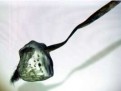
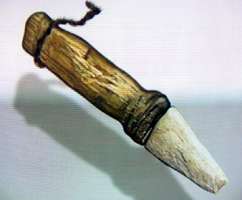
All of Ötzi’s tools demonstrate that he was very capable of maintaining life away from home for long periods of time. Interesting that he had the tinder fungus tool to use for starting fires and an ax head made of copper. I can’t imagine everyone had one of those. Maybe he was wealthy and had unusual access to fine materials.
Where did Ötzi live?b
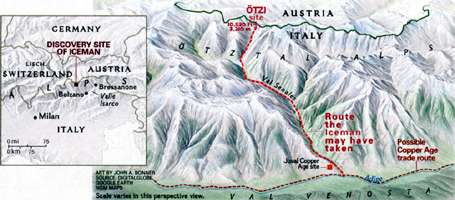
Ötzi likely lived south of the main Alpine ridge. This is indicated by pollen, teeth and wood analyses as well as his flints, which came from the Lake Garda region, and his axe, whose shape is known from the Remedello culture on the Po plain. Ötzi could have been a member of the Tamins-Carasso-Isera 5 Alpine cultural group, which settled in the Vinschgau Valley. If only Öti had also taken along a piece of stoneware or ceramic with him a clear regional classification would have been possible, as every cultural group had a unique way of shaping, decorating and firing clay.
The Death of Ötzi the Iceman
Using a multi-slice CT Scan, Swiss researchers revealed an arrowhead deep inside his left shoulder yet there were no remains of the arrow shaft. Ötzi was apparently attacked by his enemy with a bow and arrow. Maybe someone tried to remove the arrow, leaving the arrowhead lodged in Ötzi’s body. The arrow must have damaged one of his arteries, causing him to bleed severely. Fatally injured, his remains were frozen so that they were preserved for over 52 centuries until 1991 when he was found.

10 thoughts on “Einkorn Wheat Bread: Ötzi the Iceman’s Last Meal”
Otzi the ice man was believed to be a warrior because he appears to have died of wounds received in a fight, predominately an arrow in his back, and it’s theorized that he had been in a fight and retreated into the alps after being attacked. Also, when they scanned his head, his brain showed signs of blunt force trauma. Another reason Otzi was believed to be a warrior was that the scientists found three other people’s blood on him, suggesting he had recently been in a fight.