
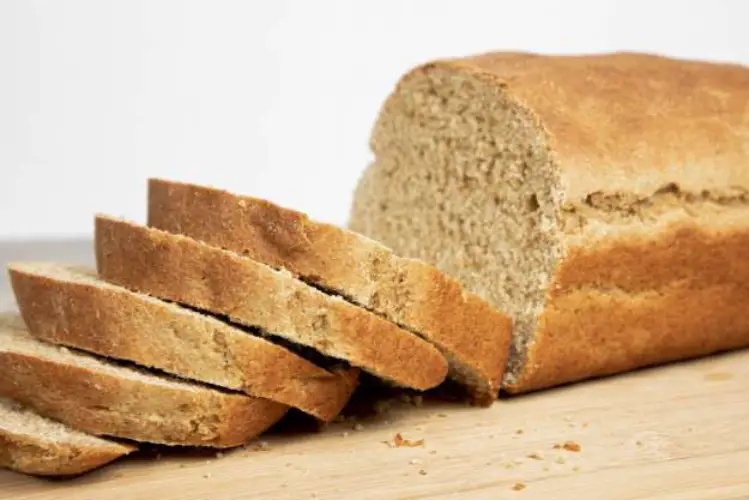
- Mix water, yeast, and honey into a stand mixer and let stand.
- Add flour and salt and mix until just combined.
- Let rise in mixing bowl for 25-35 minutes.
- Knead to punch down.
- Place in buttered loaf pan (You can use oil, but we've found that butter works SO much better for this particular recipe. It prevents sticking much better than oil). It may be too wet to shape. Don't add more flour. Just water your fingers and smooth it out in pan. You don't have to shape it into a loaf. Preheat oven to 375 degrees, and let rise in the pan for another 25-30 minutes. Watch it. Depending on the temperature in your house, it may go faster or slower. It should have crested the top of the pan when you put it in the oven.
- Bake for about 33-38 minutes until golden brown. This largely depends on your oven. Start with 33 and check it.
- Remove from oven and butter the top. Let cool 20 minutes in pan.
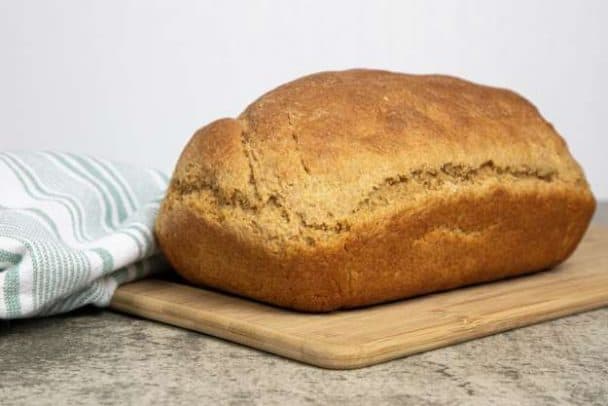
- Remove from pan and let cool for an hour or so (We've also sliced it right then if you can't wait, but if you're going to do that, we recommend an electric knife to avoid squishing it).
- Stores well in a bread bag if you'll use it quickly. We sometimes store it in the refrigerator, but it can dry it out. It still works great for toast!
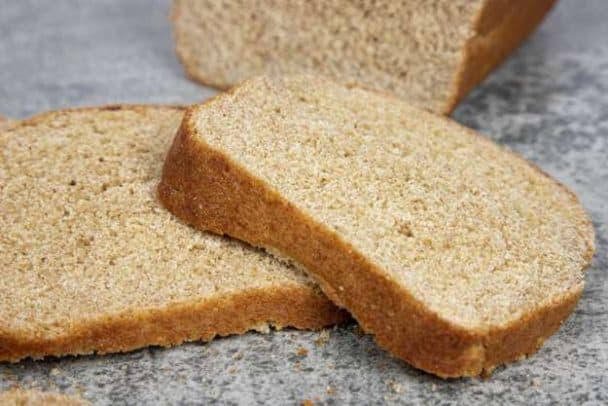


73 thoughts on “Whole Grain Einkorn Bread”
Love this recipe, can you double everything to make 2 loaves?
Yes, you can!
My Amish family here in Gladwin, Michigan, gave me a bag of freshly ground whole einkorn flour that a local farmer had grown. We had been discussing breads and flours and so that gift was a wonderful surprise. I’ve tried two recipes with it so far: the first one made tasty loaves but sank very much in the middle, and the second one is yours. It didn’t sink at all and came out beautifully. I’m so surprised at the texture of the bread (from each recipe
); it’s so soft and springy and nothing at all like the other regular flours ones I’ve baked. I even forgot the salt in your recipe but it still tastes wonderful. I’ve been looking at many recipes and so many say to knead it after the first rise, but that has been impossible so far. In fact, when I mixed all the ingredients in your recipe (minus the salt!), it was very dry; but after the rise was very wet and all I could do was stir and ‘pour’ into the loaf pan. I’m assuming this is because it takes time to absorb all the water?? I did let it rise again to the top of the pan and then baked it, and, like I said it turned out great. I love it and will order the flour if my amish farmer has no more to sell!
Hi Mary, we’re so glad you enjoy the bread. Yes, this recipe’s dough is supposed to be very wet because of the nature of einkorn. I wouldn’t recommend trying to knead it unless you’re using an electric mixture, but I haven’t found it to be necessary in this particular recipe.
Are there suggestions you have for baking at over 5,000 ft?
Hi Nina, I’m not sure you’ll need to do much for this recipe because our altitude is nearly 5,000, so it’s probably not much different, but here are some guidelines for high altitude baking in general. 1. Reduce Yeast. Use about 25% less yeast than the recipe calls for. Dough rises faster at high altitude, so reducing yeast helps prevent over-proofing and collapsing. 2. Increase Liquid Add 1 to 2 tablespoons more liquid (water, milk, etc.) per recipe at 3,000–5,000 feet (again you probably wouldn’t need to do that here because of our altitude). For each additional 1,000 feet, add another 1½ teaspoons. This compensates for faster evaporation and drier dough. 3. Oven Temperature and Baking Time. Increase oven temperature by 15–25°F to help set the bread’s structure before it over-expands. Because of the higher temperature, decrease the baking time by 5–8 minutes per 30 minutes of baking.