

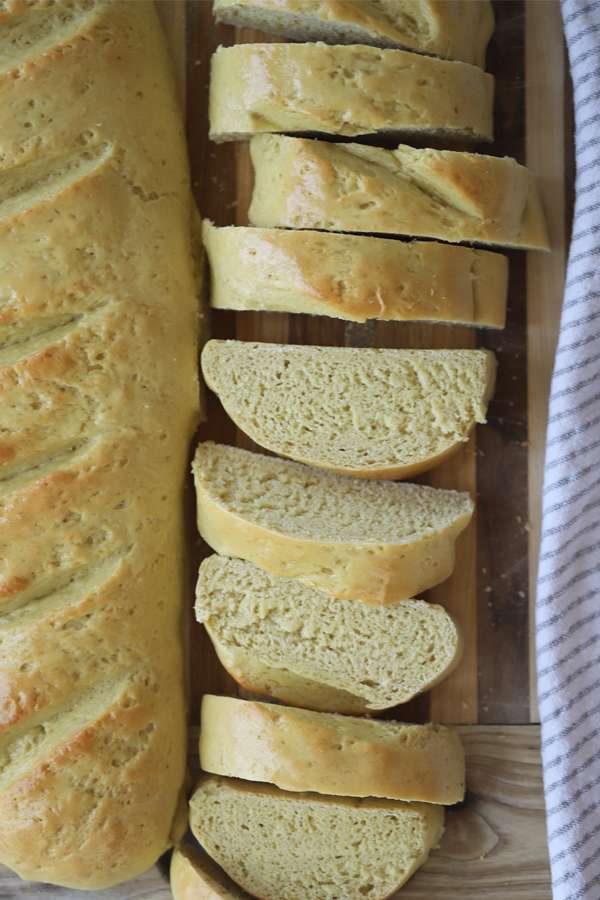
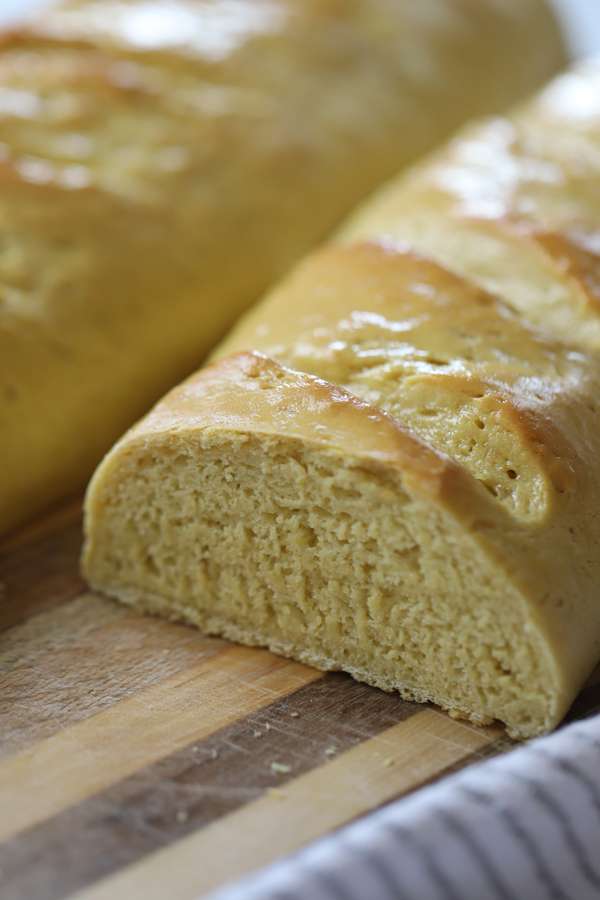
This Einkorn Crusty French Bread recipe is made with our Organic All-Purpose Einkorn Flour. There are also a few easy follow tips that will help you get that crisp outer crust, and soft, chewy inside. So delicious!
 This is a step-by-step guide to making delicious Einkorn French Bread made with all-purpose Einkorn flour.Here’s the link to the recipe for this delicious Einkorn French Bread with more step by step details
 Since there isn’t as much gluten in the einkorn flour the process takes just a little longer, maybe 15 minutes longer for that extra cycle of rising and kneading.Just to give you an idea of how the process works: gluten is formed when water is added to the flour and then mixed. The fermentation process happens when the einkorn flour, yeast and water mix together and that, my friends, is what allows the bread to rise and helps make the bread light and airy.
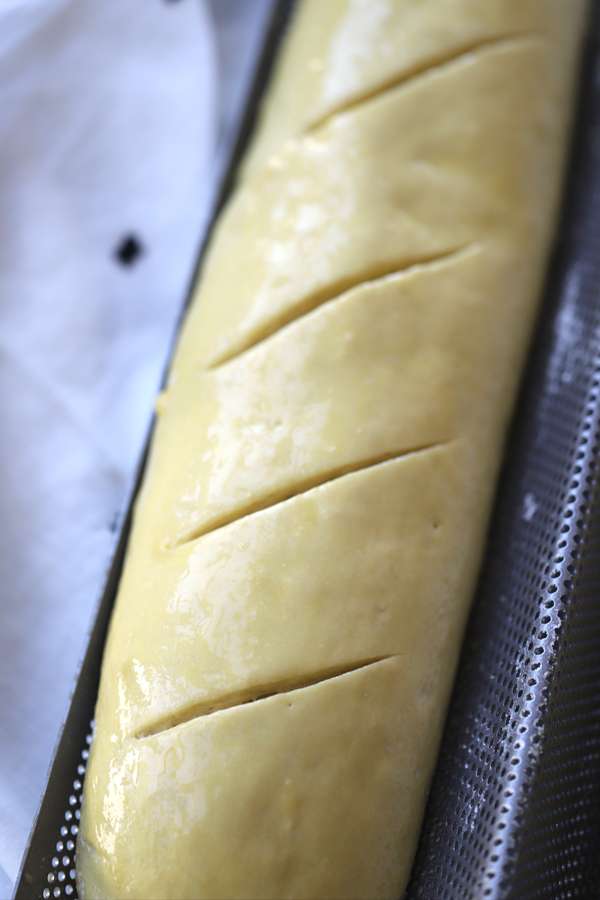
 All-purpose einkorn is a little denser than regular all-purpose flour and tends to be a little less crusty too. While I was testing and tweaking this recipe I was given a hint in how to help get a thicker crust on the outside of the Einkorn french bread. I put the oven racks on the 2 lowest slots in the oven. Before I pre-heated the oven, I put a cookie sheet on the bottom rack with about 3 cups of water. As the oven was preheating, the water became hot, evaporated, and produced more humidity in the oven. I baked my bread in the oven and the higher humidity gave the french bread a thicker crust.I’ve also heard you can throw 4-5 ice cubes in the bottom of the oven when you bake the bread and it’ll make the crust thicker too. Let me know if you try this method and how it works!Another obstacle in making einkorn bread is it doesn’t hold its shape quite as well as normal flour. When you’re cutting slits in the top of the bread you run the risk of deflating the entire loaf. To get that artisan-looking slash on the top of your bread it is best to use a very sharp knife, a razor blade or the fancy razor blade tools called a “bakers lame.” If you love baking and want those amazing slashes to come out perfect, a bakers lame is the tool for you! It’s basically a curved razor blade with a handle. I don’t have one of those so I put a razor blade to work this time.There are also some fancy french bread pans you can use. I made the bread a couple of times, once with my french bread pans and another time without and they both turned out great.If you’re looking for some more delicious Einkorn recipes made is all-purpose Einkorn flour, here are a few you might wanna try…EInkorn Lemon Blueberry SconesEinkorn Chocolate Chip CookiesEinkorn German PancakesLet us know how they turned out!!
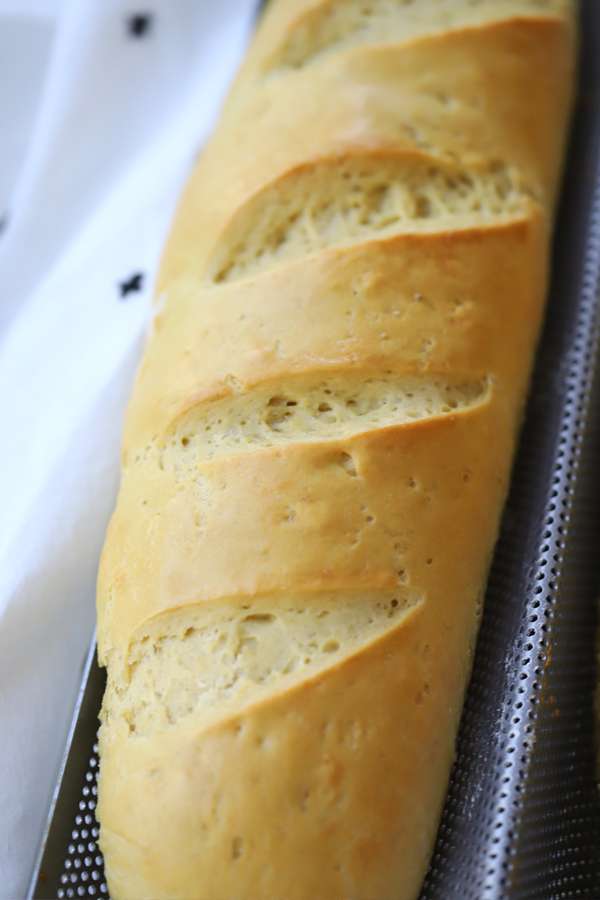
This is a step-by-step guide to making delicious Einkorn French Bread made with all-purpose Einkorn flour.Here’s the link to the recipe for this delicious Einkorn French Bread with more step by step detailsHow to make the best einkorn french bread:
There are a few things I’ve learned about all-purpose flour that will make your baking more successful. First of all, you will need to give yourself just a little more time to allow the bread to rise. I suggest an extra cycle of rising and kneading. The einkorn all-purpose flour doesn’t absorb the water quite as fast as regular all-purpose flour. I have found that if I add all the flour at once, the dough is dry and doesn’t rise very well.If I add most of the flour, let it rise, and knead it again, it can take in more flour. If you don’t add enough flour to this dough, you run the risk of your loaves deflating when you move the pan, close the oven door, or brush them with egg or milk mixture.Since there isn’t as much gluten in the einkorn flour the process takes just a little longer, maybe 15 minutes longer for that extra cycle of rising and kneading.Just to give you an idea of how the process works: gluten is formed when water is added to the flour and then mixed. The fermentation process happens when the einkorn flour, yeast and water mix together and that, my friends, is what allows the bread to rise and helps make the bread light and airy.All-purpose einkorn is a little denser than regular all-purpose flour and tends to be a little less crusty too. While I was testing and tweaking this recipe I was given a hint in how to help get a thicker crust on the outside of the Einkorn french bread. I put the oven racks on the 2 lowest slots in the oven. Before I pre-heated the oven, I put a cookie sheet on the bottom rack with about 3 cups of water. As the oven was preheating, the water became hot, evaporated, and produced more humidity in the oven. I baked my bread in the oven and the higher humidity gave the french bread a thicker crust.I’ve also heard you can throw 4-5 ice cubes in the bottom of the oven when you bake the bread and it’ll make the crust thicker too. Let me know if you try this method and how it works!Another obstacle in making einkorn bread is it doesn’t hold its shape quite as well as normal flour. When you’re cutting slits in the top of the bread you run the risk of deflating the entire loaf. To get that artisan-looking slash on the top of your bread it is best to use a very sharp knife, a razor blade or the fancy razor blade tools called a “bakers lame.” If you love baking and want those amazing slashes to come out perfect, a bakers lame is the tool for you! It’s basically a curved razor blade with a handle. I don’t have one of those so I put a razor blade to work this time.There are also some fancy french bread pans you can use. I made the bread a couple of times, once with my french bread pans and another time without and they both turned out great.If you’re looking for some more delicious Einkorn recipes made is all-purpose Einkorn flour, here are a few you might wanna try…EInkorn Lemon Blueberry SconesEinkorn Chocolate Chip CookiesEinkorn German PancakesLet us know how they turned out!!Tips for making the best Einkorn Crusty French Bread:
- add an extra cycle of kneading and rising–this will help the bread to have more structure so it doesn’t deflate when rising or cooking.
- add a pan of water in the bottom of the oven to help add more humidity which will give you more crust on your bread.
- use a very sharp knife, razor blade or bakers lame to cut the artisan-looking slashes in the einkorn french bread
- this recipe works great for all-purpose einkorn pretzels and einkorn pizza dough.

- In the bowl of an electric mixer, combine 1 1/2 Cup warm water with the yeast, add the honey, and stir until dissolved.
- In an electric mixer, with the dough hook on, add 4 cups all-purpose Einkorn Flour and the salt. Mix until combined. Mix for 2-3 minutes or until the dough is smooth.
- Now add einkorn flour 1/4 cup at a time until the dough is pulling away from the sides of the mixing bowl. Add only enough flour to keep the dough from sticking to the sides of the bowl. ( You may not have used the entire 6 cups of flour. That's normal. Einkorn takes a little longer to absorb the water. You will add more flour when you knead the dough.)
- Cover the dough with saran wrap or a kitchen towel and let it sit for 30 minutes or until double.
- Turn the mixer on low again and add flour, 1/4 Cup at a time, until the dough pulls away from the sides of the bowl again. This recipe calls for 6 cups total but remember, it is UP TO 6 cups of Einkorn flour. There are a number of factors that depend on the success of yeast bread, temperature when rising, altitude and humidity. (You should have about 1/4-1/2 cup flour left. You will use this when you knead the dough for the last time before shaping it into loaves)
- Let the dough rise until double again. (I found that this extra round of kneading and rising helped immensely with the success of the french bread. Einkorn flour just takes a little longer to absorb the liquid)
- Pour the dough out onto a floured countertop. Shape into the shape of loaves you want. I like to divide the dough into 2. Roll the dough out into a square, about 12 by 12. Roll the dough up like you would cinnamon rolls and pinch the edges under the loaf.
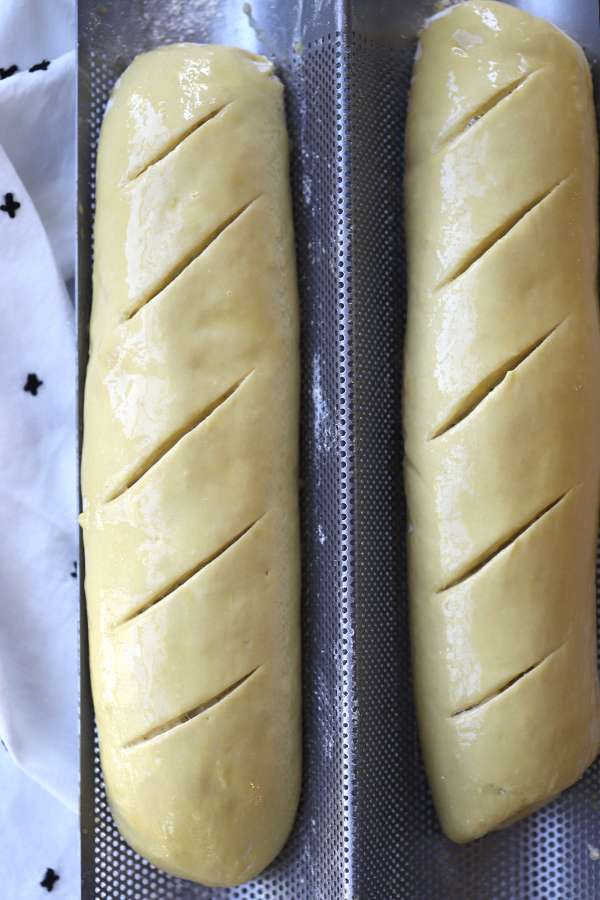
- You can use a french bread loaf pan or just place them on a greased baking sheet, side by side.
- Using a very sharp knife or a baker's lame, (a razor blade works great too, cut 5 slices in the top of your french bread loaves.
- In a small bowl, crack an egg and add a tablespoon of water. Beat the egg and the water together until its a uniform color and consistency. Using a pastry brush, brush each of the loaves.
- Preheat the oven to 350 degrees.
- While the oven is preheating, using a 9 by 13 baking dish or a large baking sheet, place the baking sheet on the bottom rack of the oven and then pour 3 cups of hot water into it. While the oven is preheating, it will heat the water in the baking pan creating humidity inside the oven. This will help you get a nice crust on your french bread.
- Let the loaves rise for another 30 minutes and then place in a 350-degree oven.
- Bake for 30 minutes or until golden brown.
 Jill is the blogger and baker behind The Carefree Kitchen. She loves experimenting with flavors in the kitchen. She loves to celebrate life with friends and family, and of course, great food! She loves grilling, baking, cooking and putting her own spin on all the classics. Check out more of her recipes at thecarefreekitchen.com.


27 thoughts on “Einkorn French Bread”
Hi Liz,
I am assuming you are at high altitude as am I in New Mexico. Is that 2 tablespoons yeast the high altitude recipe?? I always cut down my yeast amount at 7200′.
Is there any adjustment to this recipe for altitude? I am at 5,000 feet elevation
Thank you for creating this recipe! Will the bread turn out the same if I grind my own Einkorn grain and use that?
I am going to call amazon today and get some 100% organic Eikhorn sour dough flour. if not then just regular. It is very hard to find and expensive. But I gotta have some occasional carbs. I eat soups stews and chili. So? bread and butter 3 or 4 times a week is great choice for me with carbs. These almost seem slow burning. Complexed carbs. Bread that has protein! WOW! So excited . You really need very little food. I have never even baked a loaf of bread. My Mom would make the pie crust. My friend has a bread maker. My husband bakes everything including pie crusts. I have done none. My baking skills are Cheese cake fresh berries a carrot cake a chocolate cake etc. But sorry to say never a loaf of bread. I know your probably thinking so a practice loaf and throw it away. Good sour dough with eikorn its half is at farmers market. He was surprised I knew what it was. I will ask him for tips.
Can I make this bread without yeast? How much baking soda will replace the yeast?
Hi Liz, while it is a leavening agent, baking soda is not an adequate substitute for yeast. It will not be strong enough to raise such a stiff dough.
What about using sourdough starter? I try to avoid yeast these days due to medical issues.
Made the french bread today with the Einkorn All Purpose flour. I made three baguettes which I think turned out as the recipe is pictured. I used an Emil Henry baguette ceramic baking mold/pan. I did not use all the flour – dough was sticky but I used my rolling pin with flour dusting and rolled into 3 loafs. It is quite moist – I put a lecithin dough enhancer in it. The loaf in the picture looks quite moist as well. I am kind of looking for a thumbs up if you think I got the texture right.
hi i will be making my sourdough starter soon and i’ve learned that u should make other things like cookies, pancakes ect before i try bread. in this recipe it says to add instant dry yeast , is this where i can replace it with the starter that i created? is that the same for most recipes on this site?
thank you!
Hi Luna, it’s not quite that simple to change a yeast recipe into a sourdough recipe. Go to this link for an explanation of how to adapt yeast recipes for sourdough.
It seems that most of these bread recipes at least require alot more yueast than traditional recipes. Instead of a teaspoon, they are using tablespoons. Is that a common difference with this flour?
Hi John, I haven’t noticed that to be the case. Einkorn is trickier to coax a rise out of, but I don’t generally increase the yeast when I’m adapting the recipe.
Hi Jill,
This will be my first Einkon French bread baking, can I use the cold water, instead of warm water. Also can I use 1/2 of the recipe, can I substitute the oil with melted butter ?
You can, but the yeast will respond better in warm water.
can I use this recipe in my bread maker on the dough setting….it take 1 hour 30 min to complete….do you think that is enough time for all the flour to absorb?….should I not put all 6 cups in and just add some at the end just before shaping?
We have never tried any of our recipes in a bread machine since we don’t have one. That’s probably enough time for absorption but I really don’t know if it would turn out the same.
Excellent results from this recipe. I had to do some guessing in some points (not sure if I should punch down after first rise) but I went with what I knew and turned out some amazing einkorn loaves!
The loaves were beautiful AND delicious. Thank you so much for this recipe. I wish there were a way to attach the pictures.
I’d love to make your white bread but the recipe does not track very well and I wouldn’t count on my guessing to get it right.
Hi,i am new at bread making and was wondering if i can do a round loaf with this recipe in my dutch oven?
Hi Deborah, you can definitely do that. You may have to experiment with baking times and temperatures. I’m not sure how to adapt it for that, but conceptually it would work.
I made these yesterday, and they are very good. But in the Caribbean, my kitchen was probably about 90 degrees and very humid, so I definitely used more than 6 cups of flour. I am going to make them again in a couple of days and will pay attention to how much I actually use. I also put the baking dish with water on the bottom shelf in the bottom of the oven and it didn’t come out so crispy. That could have been my fault though, I think I put the egg wash on and then realized I needed to let the dough rise another 30 minutes. So I need to try it again, or I may try to make it with sourdough. I haven’t made that in a while, so that will be different.
It’s definitely possible that you’ll need more flour. The amount of flour varies with several factors. I personally always use more flour with this recipe because I use flour I mill myself instead of the all-purpose. Since it’s freshly ground, it’s not as dense as all-purpose that has been sitting. So, no worries if you have to use more. Wathing consistency is always the best idea.
Can you substitute whole einkorn flour in this recipe?
Hi Ed, yes you can. I have done it many times. It’s always turned out well.
I am vegan, is the egg a must?
Hi Rose, you can use a vegan substitute for an egg wash such as aquafaba, soy milk, or almond milk. I have not tried it, but we’d love to hear how it turns out.
Can you convert this to sourdough?
Hi Brittany, almost anything can be converted to sourdough. I recommend this article for help converting recipes to sourdough.