Other Names for Einkorn
We call it “einkorn” but across the world, Triticum monococcum has many names, and that’s no surprise since it’s the world’s most primitive form of wheat.
Here are the names we’ve collected:

- einkorn (German)
- small spelt (Italian)
- farro piccolo (Italian)
- engrain (French)
- Le petit épautre (French)
- tiphe (Greek)
- siyez (Turkish)
- sifon (Hebrew)
The list of names is significant because each has a meaning that weaves read more…
Starting in the 1960′s, and increasingly in the 1990′s, plant breeders undertook efforts to produce hybrid wheat varieties with the goals of improving yield and disease resistance. Both worthwhile goals but it’s possible that wheat hybridization may have led to the rapidly growing prevalence of celiac disease today.
We learn that not all gluten is created equally. A study identifies that, “Gluten proteins from wheat can induce celiac disease (CD) in genetically susceptible individuals. Specific gluten peptides can be presented by antigen presenting cells to gluten-sensitive T-cell lymphocytes leading to CD.”1
The same abstract explains that a study of over 80 varieties of wheat shows read more…
If you’re like me, you often prefer a wrap over a piece of bread. That’s why I searched and tested until I had this simple, yet most delicious, recipe for einkorn farro tortillas.
We use tortillas to make wraps filled with all the usual suspects – quinoa, beans, lettuce, salsa, avocado, and cheese. And here’s a secret for which you may (or may not) thank me: these tortillas make for especially tasty quesadillas.
This tortilla recipe is fast and easy to make. You can see my simple instructions and ingredients list under our recipes page here: Einkorn Tortillas Recipe. If you do have questions, feel free to contact us because getting them just right is a bit of an art.
When we make tortillas, we usually prepare large read more…
One of my favorite ways to eat einkorn grains is whole…chewy, yet soft.
If you’re of the same taste, I think you’ll love this new einkorn recipe: Einkorn Pilaf with Lemon
Try it out and share your experience here or at facebook.com/einkorn
Thank you to Dishes and Dishes for sharing this recipe with all of us!
I really enjoy trying a new delicious and simple recipe. That’s why I was so excited when I came across this one from the Bread Experience!
These little delights are made with sesame seeds, salt, water, olive oil, and fresh Einkorn flour. They are healthy, great tasting, and very simple to make.
If you’ve already tried the recipes for einkorn bread, pitas, and pancakes, now you can try these delicious Sesame Whole Grain Einkorn Crackers!
Click here to get the recipe. Try it out and share your experience here or on facebook.
Triticum monococcum is the domesticated form of einkorn wheat, also know as einkorn farro. The wild form of einkorn is called Triticum boeoticum.

Einkorn Wheat Spikelets
Einkorn is a German word that literally means “one kernel”. This unique grain gets its name from the single (one) kernel per spikelet, or husks containing kernels on the head of the grain plant.
Einkorn wheat has a very simple diploid genetic structure, with only 14 chromosomes compared with the hexaploid genetic structure in modern wheat containing 42 chromosomes.
The attractiveness of the einkorn grain to dieticians and health conscious consumers is its nutritional benefits over other types of wheat. Since wheat is such a large contributor to our diets, eating a wheat high in nutrition can greatly contribute to health.
I usually tell people that whole grain pastas were never meant to be. They are slimy, don’t mix in the flavor of the sauce, and fall apart very easily on the plate. But after eating einkorn pasta, I’m taking that all back.

Jovial Foods Spaghetti Whole Grain Einkorn Pasta
I never considered that einkorn pasta could be very different than any other whole grain pasta until Jovial sent a free sample to talk about on the blog. Even then, it sat on my shelf for quite some time because I didn’t think it was worth trying.
Finally, I felt up to it one day and cooked the pasta for dinner. WOW! I loved it, and so did my entire family. I went to The Good Earth (our local health food store) and found it to be available at a great discount so I bought several more boxes.
A special dinner with guests was coming up so I decided to cook up the einkorn pasta with my special pesto recipe. It was a hit with our guests too!
The einkorn pasta adds a perfect flavor to the dish and it doesn’t taste grainy or feel slimy. Instead, it was sweet, slightly nutty, rich in flavor, the texture was very desirable. Einkorn’s nutritional qualities combined with the tasty pasta make it real winner in my book. Nice work Jovial!
I noticed they have several types of einkorn pasta listed for sale on Amazon but it’s often out of stock so it must be popular. Check out some of the pastas they offer:
- Jovial Organic Whole Grain Einkorn Spaghetti, 12-Ounce Packages (Pack of 6)
- Jovial Organic Whole Grain Einkorn Fusilli, 12-Ounce Packages (Pack of 6)
- Jovial Organic Whole Grain Einkorn Rigatoni, 12-Ounce Packages (Pack of 6)
- Jovial Organic Whole Grain Einkorn Linguine, 12-Ounce Packages (Pack of 6)
Thanks to Jovial, I can eat whole grain pasta (and like it). Have any of you tried the einkorn pasta from Jovial? If so, leave a comment. I’m interested to know how you liked it.
Eli Rogosa talks in this video about the UMass Amherst program to preserve and establish heirloom wheat grains, including einkorn (Triticum monococcum), into modern agriculture.
It’s interesting how she describes the root system of the heirloom grains compared with the shallow root system of modern wheat, which relies upon chemical fertilizers.
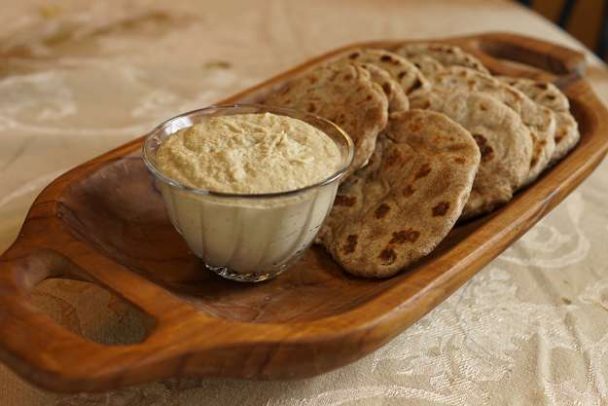
I posted my einkorn bread recipe last month and now that voting season is coming to a close, I’m finally getting around to telling you about the delicious Honey Whole Grain Einkorn Pitas I baked up. I’ll be honest: I was pleasantly surprised to see and taste pitas made from einkorn berries. Not only were they delicious but they were also very light and the texture was perfect!
To get the ingredients, ratios and directions, you can print the entire recipe for Honey Whole Grain Einkorn Pitas, listed along with the other einkorn recipes.
I first combined all of the ingredients into my Bosch bowl and mixed them completely. After mixing, I started adding freshly ground whole grain einkorn flour to the bowl until the pita mixture stopped sticking to the sides of the mixer bowl.

Keep Adding Einkorn Flour Until Pita Mixture Stops Sticking to Side of Bowl
Next, I kneaded the dough for 8 minutes then divided it into 18 dough balls. I floured a surface and then rolled the dough balls into ¼-inch thick circles. Keep in mind that read more…
I recently ground some ancient einkorn grain and made some flour for baking. I first made tortillas, which were excellent. Then I got carried away…
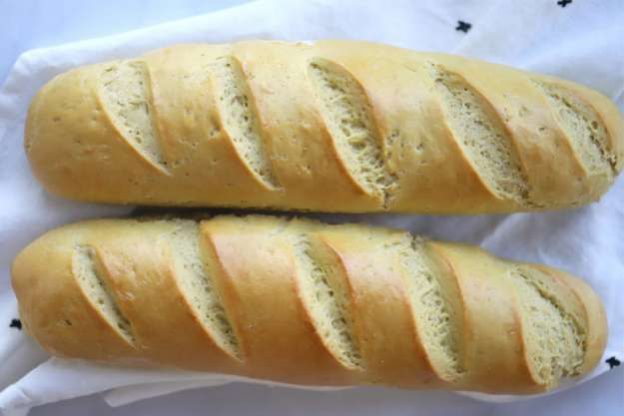
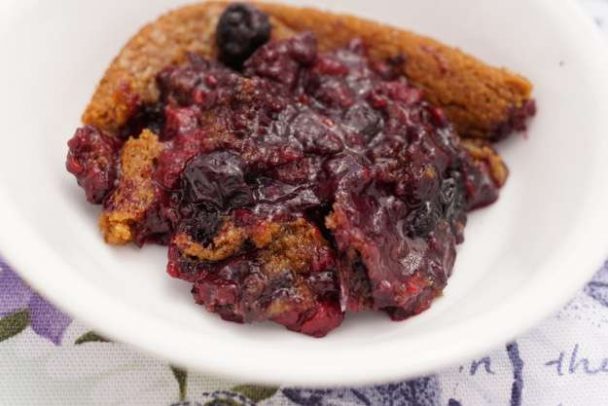
We loved the nutritious einkorn tortillas so much, I went on to make pitas, bread, and cherry cobbler. I’m going to share my pictures and recipe for the bread first and then I’ll get to sharing the tortillas and pitas as soon as I can. But first I’ll tell you about the bread…and then pitas and finally tortillas! The full einkorn bread recipe is posted under the recipe section.
Einkorn grinds into such a light and soft flour, I was afraid it would plug up my All Grain mill. However, even with my mill on the finest setting, it milled out flour just fine. However, for the bread, tortillas and pitas, I decided to move the setting 3/4 fine. Next time, I will try an even finer setting.

All Grain Mill with Genuine Einkorn Wheat Berries
After 45 minutes or so of grinding the einkorn wheat grains in my mill, I had enough einkorn flour to make the tortillas, bread, pitas, and a little extra for cobbler.
To make bread, I put 3 Cups of hot tap water and 5 Cups of einkorn flour into my Bosch and mixed them until smooth. I then stopped the mixer and added 1/3 Cup of expeller-pressed coconut oil, 1/3 Cup raw, unfiltered honey, 1 1/2 Tablespoons of yeast, and then 1 Tablespoon of sea salt.

Mixing Ingredients to Make Einkorn Bread
After mixing all the ingredients together, I kept the mixer running and gradually added 5 1/2 Cups of einkorn flour and let it sit for 20 minutes. After this brief rest, I started the mixer and slowly added more flour until the einkorn dough was no longer sticking to the sides of the mixer bowl. I learned that making einkorn bread does require more flour than I thought it would but eventually it did stop sticking to the mixer bowl. read more…
We take for granted many things in our day to day lives. I suppose it’s essential to cope with the busy schedule all working adults must deal with. Consider for a moment: Store-bought flour and baked products. Most of us assume that the grain used to make all the baked goods and even the packaged flour comes to us much like the story of The Little Red Hen. She planted the wheat, she watered the wheat, she harvested the wheat, threshed it, took it to the mill to be ground, took the flour home and then baked bread. Mmm Mmmm good, etc.
Well, up until 1870′s that is basically what happened and on the surface it may not seem to be any different now. But as the saying goes: the devil is in the details… From the book, “The Story of a Grain of Wheat” by William C. Edgar (1904) we read the following:
“The substitution of rolls for mill-stones was the most radical advance ever made in the science of milling. read more…
If there were a single change to our daily diet that would significantly increase our daily antioxidant intake, what would that change be? Eat einkorn bread.
I came across some very interesting researcha recently regarding the loss of antioxidants (specifically carotenoids) during the food processing process in the production of bread, water biscuits and pasta. The flours they studied? There were three: Einkorn, bread wheat, and durum wheat semolina.
In all three flours, antioxidant levels decreased significantly through the processing stages but einkorn was significantly more successful at preserving its high antioxidant levels through the entire baking process than the other flours. I thought that was interesting.
You may remember my former post about einkorn nutrition, when I shared some information about einkorn’s superior antioxidant attributes:
- Einkorn contains 3 to 4 times more beta-carotene than modern wheats (Boosts immunity, helps prevent cancer and heart disease)
- Einkorn contains 35 times more Vitamin A than modern wheats (Healthy eyes, reproductive organs and prevention of many cancers)
- Einkorn contains 3 to 4 times more lutein than modern wheats (Prevention of macular degeneration and cataracts)
- Einkorn contains 4-5 times more riboflavin than modern wheats (Used by the body to create energy and is an antioxidant that slows aging)
Not only are antioxidants much higher in einkorn compared with other grains but now, with the results of this recent study, we learn that einkorn’s carotenoid levels are also better preserved in the bread making process, making it an ideal candidate for improving our modernized diets.
Can you imagine the effect it would have on the health of a child if he or should could grow up eating this ancient einkorn wheat? The more I think about the impact, the more I realize the need to increase the production of this crop and get it into the hands of more people throughout the world.
References:
a
doi:10.1016/j.foodchem.2010.01.034
I’m a mother of 4 kids (with one more on the way) and the worst feeling for me is to provide a healthy breakfast meal first thing in the morning. I try to feed my family healthy foods but sometimes the “cheap cold cereal” is all too tempting as a cop-out meal in the morning…I’m sure you know the feeling

Cooking Einkorn Pancakes
In the last year, I discovered “blender” pancakes in one of those cook books sitting on my shelf (I can’t remember the book). The pancakes are so easy to make and it’s very quick. My kids and husband also love them.
Over time, I modified the recipe to use more natural and healthy ingredients; Since we eat this meal so often, I wanted to make it as healthy as possible for the family.
You can see my recipe by clicking here. I’ve also added some additional comments and pictures below so you can see better how I have made this work for our family.
When I first made this recipe, I was surprised at how simple and easy it was. It took actually making it to realize just how simple it was so I’ve broken it out into 4 simple steps below.

Fresh whole grain goodness on it's way to become finely ground flour!
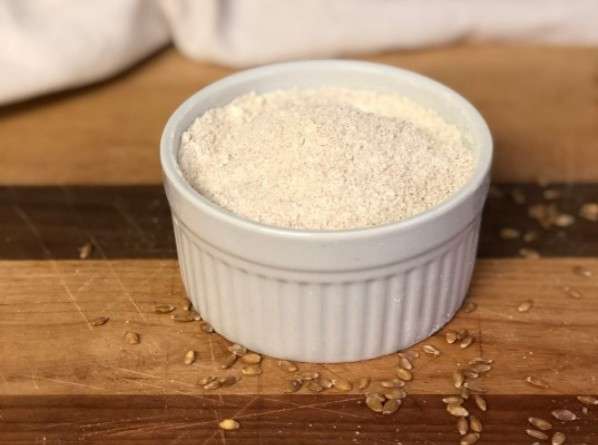
I just ground some fresh whole-grain einkorn flour. It’s beautiful, slightly yellow and about as soft as powdered sugar. The household grain mill that I used did an awesome job. I can’t wait to make pancakes!
There are many different mills on the market that are easy to use and not too expensive. The big draw for most people in owning your own grain mill is the taste of baked goods made with freshly ground whole grains and the satisfaction of just knowing that you’re getting pure whole-grain goodness with all the nutrients you can possibly get from your grain. Flour bought in a bag from the store loses a large portion of it’s vitamins by the time you get it.
Personally, I own two household grinders: the K-Tec Kitchen Mill and the Country Living Grain Mill. I like the K-Tec for it’s speed and the superfine texture it can grind the grain to. I like the Country Living Grain Mill for it’s versatility, control over the fineness of the flour and relatively efficient hand-grinding.
Household grinders fall into three basic categories: 1) Ceramic Stone Grinders, 2) Steel Burr Grinders and 3) High-speed Impact Grinders. Like most things in life, these have their advantages and disadvantages. So, I’ll list them here and let you decide which is the right type for you and your family.
Ceramic Stone Grinders
Advantages:
- Grinds finer flour than burr grinders and is on par with high-speed impact grinder.
- Adjustable coarseness: ranges from cracked wheat and fine flour.
- Good in a power failure or emergency (if your unit can be hand-turned).
Disadvantages:
- Manual stone grinders are usually harder to turn than manual burr grinders.
- Stones will gum up almost instantly if you try to grind oil bearing seeds.
- Slow and tiring if you are turning by hand.
Steel Burr Grinders
Advantages:
- Grinds oil bearing seeds as well as dry grains – burrs will not gum up.
- Adjustable coarseness: ranges from racked wheat and fine flour.
- Resists damage if you miss a stone in your grain. (I always sort through my grain before milling.)

High Carbon Steel burrs from Country Living Grain Mill
- If you are turning by hand, these are generally easier than stone grinders
- Good in a power failure if it can be hand-turned.
Disadvantages:
- Will not grind quite as fine as a ceramic stone grinder.
- Slow and tiring if you are turning by hand.
High-speed Impact Grinders
Advantages:
- Grinds grain into very fine flour.
- Grinds grain very quickly.
- No sweat dripping down your face afterward.
Disadvantages:
- Very loud (I use ear plugs when using mine…problem solved.)
- May self-destruct if you miss a large stone in your grain. (REPEAT: Always sort through your grain before milling.)
- Impossible to completely clean it out if you want to avoid mixing with other types of grain. (Think allergies.)
- Even on the coarsest setting the flour comes out pretty fine. No “cracked wheat” or graham flour here.
- Must have electricity. (This would be important in the event of an extended power failure.)
My in-laws (and their ill-prepared neighbors) were glad they had extra food stored at their house when hurricane Fran steamrolled Raleigh, NC in 1996. Store shelves were bare before the first rain-drop even fell on land and the power was out on their street for more than a week. There is a lot that goes into emergency preparedness and having an appropriate grinder on hand might be an important step.
In 2006, the Scandinavian Journal of Gastroenterology released the results of a study which suggested the possibility of adding einkorn grain to the dietary options of celiac patients. I was able to get a copy of the full study but cannot post it entirely because of copyright restrictions. Instead, I have quoted the abstract and posted it below:
(For those who don’t know, the genetic classification of einkorn wheat is Triticum monococcum, which is an important detail as you read this post.)
Study Abstract
Lack of intestinal mucosal toxicity of Triticum monococcum in celiac disease patients

Cultivated Einkorn (Triticum monococcum)
Daniela Pizzuti1, Andrea Buda1, Anna D’Odorico1, Renata D’Incà1, Silvia Chiarelli2, Andrea Curioni3 and Diego Martines1
1 Department of Surgical and Gastroenterological Sciences, 2 Department of Surgical and Oncological Sciences, 3 Department of Agricultural Biotechnology, Padua University, Italy
Scandinavian Journal of Gastroenterology, 2006; 41: 1305-1311
Objective. The treatment of celiac disease is based on lifelong withdrawal of foods containing gluten. Unfortunately, compliance with a gluten-free diet has proved poor in many patients (mainly due to its low palatability), emphasizing the need for cereal varieties that are not toxic for celiac patients. In evolutionary terms, Triticum monococcum is the oldest and most primitive cultivated wheat. The aim of this study was to evaluate the toxicity of T. monococcum on small intestinal mucosa, using an in vitro organ culture system.
read more…